

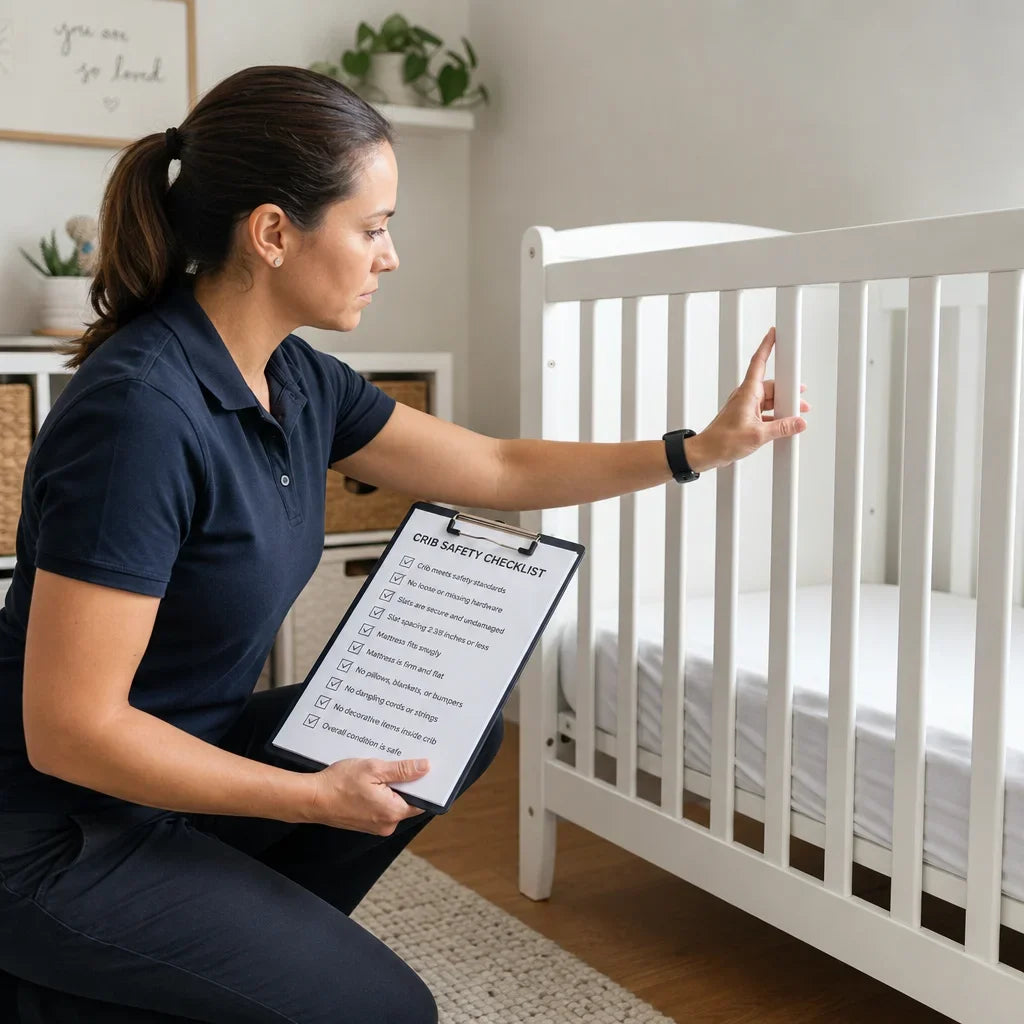
Most people think a safe crib is just a crib that looks sturdy. A real crib safety checklist goes further. It checks the crib, the mattress fit, the room around it, and the way baby will actually sleep in it.
This page is educational. It does not replace your crib manual, your pediatric care team, or current government recall notices. If a product manual conflicts with a general tip here, follow the manual.
Quick crib safety checklist: the must-pass items before baby sleeps here
A safe sleep setup passes every item below before the first nap or overnight sleep.
Printable pass/fail crib checklist
Mark each line as Pass, Fix Before Use, or Do Not Use.
Crib structure
- Crib feels solid when gently pushed from the sides.
- All parts match the manufacturer and belong to this exact model.
- No screws, bolts, brackets, pins, or support pieces are missing.
- No cracks, splits, loose joints, warping, or repair marks.
- No rough edges, splinters, peeling finish, or flaking paint.
- No broken slats or bent side panels.
- No decorative cut-outs that could trap body parts or clothing.
- No corner posts or protrusions that could snag clothing.
- No drop-side mechanism.
- No active recall found for this exact crib.
Mattress and bedding
- Mattress is firm and lies flat.
- Mattress is the correct type and size for this crib.
- Mattress fits snugly with no obvious side gaps.
- Mattress support is locked in correctly.
- Only a fitted sheet is on the mattress.
- No extra padding, toppers, folded blankets, or inserts.
Inside the crib
- Crib is empty except for baby, mattress, and fitted sheet.
- No pillows.
- No loose blankets.
- No stuffed toys.
- No crib bumpers or liners.
- No sleep positioners, wedges, or loose accessories.
Room placement
- Crib is away from windows, blinds, and curtain cords.
- No monitor cords, charger cables, or power bars near reach.
- No shelves, frames, lamps, or heavy décor above the crib.
- Crib is away from heaters, radiators, and strong direct sun.
- Nearby dressers, bookcases, and shelving are anchored.
Secondhand and recall check
- You know the brand and model.
- You can find the product label or manual.
- Crib has not been modified.
- No homemade parts or hardware substitutions.
- No damage from storage, moving, or moisture.
Result
- Pass: ready to use.
- Fix Before Use: correct every issue first.
- Do Not Use: stop if the crib is damaged, recalled, modified, or missing parts.
What makes a crib safe?
A safe crib is structurally sound, assembled exactly as intended, matched with the right mattress, and used as an empty sleep space. That is the core of crib safety requirements. A crib can be well built and still be unsafe if it holds loose bedding, toys, or accessories.
Current safety information should come from the manufacturer, retailer, and official recall sources in Canada. That matters more than marketing words. If you are shopping, look for clear model details, assembly instructions, support information, and plain safety compliance language rather than vague claims about being "premium" or "baby-safe."
Crib inspection checklist: frame, slats, hardware, and finish

A crib is safe only if every structural part is intact and tight. Check the slats, top rails, side panels, mattress support, legs, and joints for cracks, bending, splinters, rust, or movement. If any part looks repaired, glued, drilled, or forced into place, stop using it.
Slat spacing matters because wide gaps can create an entrapment hazard. A common crib safety standards slat spacing guideline is no more than 2 3/8 inches between slats. If you cannot confirm that spacing, or if the crib is older and unlabeled, treat that as a red flag and check the manual or choose a current model instead.
All hardware should be original to the crib and tightened as directed in the manual. Missing bolts, mixed replacement screws, or brackets from another model are enough to fail a crib checklist. Keep the instruction booklet or a saved digital copy so reassembly after a move is done correctly.
The finish should stay smooth and intact. Peeling paint, flaking stain, bubbling laminate, and rough bite marks on top rails all mean the crib needs attention or replacement. For ongoing maintenance, re-check the crib after assembly, after any move, after changing mattress height, and then on a regular routine such as monthly best practice.
Mattress fit and firmness: how to know the crib and mattress work safely together

A safe crib mattress is firm, flat, and made to fit that crib properly. Soft surfaces, sagging centres, stacked padding, or improvised inserts change how baby lies and create avoidable risk.
The mattress should sit snugly inside the crib with no obvious gaps around the edges. If the mattress slides around, lifts unevenly, or leaves visible space by the sides or corners, the fit is not good enough. Use only a fitted sheet made for that mattress size.
Full-size cribs, mini cribs, and some convertible models do not all use the same mattress shape or depth. That is why a mattress from another crib, even one that looks close, should not be assumed safe. Match the mattress to the crib model where the manufacturer requires it.
Nothing should go under or on top of the crib mattress except what the manufacturer allows. Do not add toppers, foam pads, folded blankets, sleep positioners, or extra cushioning to "improve" fit. Those products solve the wrong problem and can make the sleep surface less safe.
What should and should not be in a crib
The safest crib setup is simple: baby, a firm mattress, and a fitted sheet only. That answers both the baby crib safety checklist question and the daily setup question.
Here is the clearest way to remember it:
| Safe in crib | Keep out of crib |
|---|---|
| Baby | Pillows |
| Firm, flat mattress | Loose blankets |
| Fitted sheet | Stuffed animals |
| Crib bumpers or liners | |
| Sleep positioners and wedges | |
| Toys and loose accessories |
Each item on the keep-out list has a specific risk. Pillows and blankets can increase suffocation risk. Bumpers, liners, and wedges can add entrapment or rebreathing risk. Toys and accessories can become hazards once baby rolls, squirms, or presses against them.
Parents often ask how to prevent baby from bumping a head on the crib rails. Minor bumps can happen as babies move and learn their space. The safer approach is an empty crib, correct mattress height, and a well-assembled crib, not adding padded products inside the sleep area.
Are crib bumpers safe in Canada? What to use instead
The safest choice is to avoid crib bumpers and similar in-crib padding unless current Canadian guidance for a specific product says otherwise. In general safety advice, bumpers are not the first answer for a standard crib setup.
What to use instead is mostly what not to use. Keep the crib empty. Lower the mattress when baby becomes more mobile. Re-check assembly and mattress fit. If a child seems to bump the rails often, bring that concern to your pediatric care team instead of adding soft barriers.
Mesh liners, padded liners, and aftermarket accessories should also be treated cautiously unless the crib manufacturer and current Canadian guidance clearly support that exact use. If the packaging is vague, or the item is sold as a universal fix, skip it.
Safe sleep basics every crib setup should follow
The safest sleep position for an infant is on the back for sleep. Pair that with a firm, flat sleep surface and an empty crib. That is the basic rule behind most crib safety standards 2026 searches, even though the search is really about safe sleep as much as furniture.
Room-sharing and bed-sharing are not the same thing. Room-sharing means baby sleeps in the same room on a separate sleep surface such as a crib, bassinet, or other approved product used as intended. Bed-sharing means baby sleeps in an adult bed, couch, or armchair with another person, which is a different risk profile.
Loose blankets should be replaced with sleepwear designed for sleep, such as a properly fitted sleeper or wearable blanket, if suitable for the baby's age and stage. Keep the sleep space plain and cool enough to avoid overdressing.
This guide is about setup, not diagnosis. If you have concerns about reflux, breathing, rolling, flat spots, or a baby who keeps getting into unusual sleep positions, your pediatric care team should advise you.
Why you should not put a crib against a wall, window, or cords

A crib needs clear space around it because nearby hazards can end up inside baby's reach faster than parents expect. Cords, blinds, curtain pulls, shelves, framed art, wall décor, lamps, and nearby furniture all matter once a baby can stretch, roll, sit, or stand.
A wall can also create a tight gap if the crib shifts or if another piece of furniture crowds it. The real issue is not the wall alone. It is the trapped space, hanging items, and climbable surfaces around the crib.
Windows and blinds deserve special attention. A practical rule used in nursery safety advice is to keep cords at least 3 feet from the crib. If that distance is hard in a condo or apartment, move the crib first, secure cords out of reach, and remove anything hanging low near the sleep area.
Small nurseries are common in Toronto condos and townhomes. In a tight room, prioritize a hazard-free zone around the crib over decorative symmetry. That may mean moving the dresser, skipping a floor lamp, mounting storage elsewhere, or putting the chair on the opposite side of the room.
Nursery hazards beyond the crib: changing table, dresser tip-overs, electronics, and air quality

A nursery safety checklist should cover the whole room, not just the crib. Tip-over injuries, falls from changing surfaces, and cord hazards are as practical as crib checks.
A changing table should be set up so diapers, wipes, and cream are within arm's reach before you place baby down. If the manufacturer includes a restraint system, use it as directed. Never step away, even for a few seconds, because rolling can start earlier than expected.
Dressers, bookcases, and shelving should be anchored to the wall. That is especially important once drawers become steps in a toddler's mind. Keep heavier items in lower drawers and avoid placing tempting objects on top.
Modern nursery hazards often come from electronics. Keep baby monitors, charger cables, sound machines, humidifiers, power bars, and extension cords well away from the crib and out of reach. Place devices where cords do not drape, loop, or cross furniture edges.
Air quality matters too. Let new furniture air out if there is a strong smell, ventilate the room, and choose low-odour materials and finishes where you can verify them. Do not make your own modifications with paint, adhesive film, or hardware-store parts unless the manufacturer confirms compatibility.
Smoke alarms and carbon monoxide alarms should be installed and maintained according to Ontario and manufacturer guidance. Keep an easy path out of the room and make sure caregivers know the basic room layout in the dark.
Secondhand, older, and recalled cribs: when to use one and when to walk away
Secondhand cribs are not automatically unsafe, but they deserve a much stricter inspection. Age alone does not answer how old can a crib be and still be safe. Condition, original parts, current compliance information, and recall history matter just as much.
A used crib is a poor choice if it is missing hardware, lacks labels, has been repainted, has homemade repairs, uses replacement parts from another model, or came with no manual and no clear model number. Unknown history is not a small issue with sleep products.
Drop-side cribs should be avoided. Guidance in North America has moved away from them because moving side hardware can fail or loosen over time. If a hand-me-down has a drop-side, the safer answer is usually not to troubleshoot it.
Searches for 2011 crib safety standards usually come from parents trying to date an older crib. The practical takeaway is simple: older cribs need closer scrutiny, and unlabeled or outdated models are usually not worth the risk or the guesswork. If you cannot verify the exact model and its current safety status, walk away.
Older painted furniture may also raise finish questions. If a crib has chipping old paint, unknown coatings, or visible wear where a child could mouth the surface, stop and get reliable product information before using it.
How to check a crib recall in Canada and what to do next
A crib recall check starts with identification. Find the brand, model name, model number, manufacture date, and any serial or batch code on the product label. Take clear photos of the whole crib, the label, the hardware, and any damage.
Then search official Canadian recall sources, the manufacturer's website, and the retailer's product support page. Match the details carefully. Similar-looking cribs can have different recall status by model or production run.
If you find an active recall or a serious safety notice, stop using the crib right away. Follow the manufacturer's instructions for refund, replacement parts, repair kit, or disposal. Do not try a home repair unless the official notice tells you to use a specific approved fix.
If the label is missing, the crib was bought secondhand, or the seller cannot confirm the exact model, assume you cannot complete a proper recall check. In that case, choosing a current crib with clear documentation is usually the safer and faster path.
Before calling support, gather these details:
- Brand and model name
- Model number and manufacture date
- Where and when it was bought
- Photos of labels and the full crib
- Photos of any crack, loose part, or missing hardware
- A short written note on what seems wrong
When to lower the mattress and when to move out of the crib
Lower the mattress before a baby's mobility makes the current height unsafe. The key milestones are rolling, pushing up, sitting, pulling to stand, and climbing attempts. Do not wait for a child to surprise you at the rail.
The exact mattress-height timing depends on the crib design and the child's development, so the manual matters more than a generic age chart. Some babies need the next lower setting earlier than parents expect.
Moving out of the crib also depends more on behavior and product limits than age alone. A child who can climb, hook a leg over the rail, or exceeds the crib's stated limits may be ready for the next sleep setup even if another child the same age is not.
An age-stage crib checklist helps:
- Infancy: empty crib, correct mattress fit, back sleeping, highest allowed mattress height only if the manual permits it.
- Around increased mobility: lower the mattress as directed once rolling, sitting, or pushing up changes the safety picture.
- Pulling up and standing: keep the crib clear of anything that can become a step.
- Early toddler: watch for climbing, rail-leaning, and attempts to escape.
- After crib transition: anchor furniture, remove climb hazards, and re-check the whole room at the child's new height.
How to choose a safe crib when shopping online or in-store
The safest crib to buy is one with clear product information, proper support, and no guessing. Start with the model details, dimensions, mattress compatibility, assembly instructions, and current safety information from the manufacturer or retailer.
When shopping online, avoid listings that skip model numbers, use only stock photos, or make broad claims without useful detail. Marketplace listings can be especially frustrating when support, replacement parts, or recall information are hard to verify.
When shopping in-store, inspect how solid the crib feels, how the hardware is built, how the mattress support works, and whether the finish looks durable and even. Ask whether replacement parts are available, what mattress fits best, and how any conversion features work later on.
For many families, seeing nursery furniture in person helps with scale, finish, and quality questions that photos cannot settle. That is one reason some GTA parents still visit a showroom even after doing most of their research online. If distance is the issue, a virtual consultation can also help with layout, crib sizing, and budget planning when that service is available.
Crib vs bassinet vs portable crib vs play yard for safe sleep
The safest choice is the one designed for your baby's stage and used exactly as intended. Price alone does not make one sleep space safer than another.
A crib usually suits families who want a longer-term nursery sleep space. A bassinet often works well for early room-sharing and smaller bedrooms. A portable crib or play yard can help with travel, grandparents' homes, or temporary setups, but each product has its own limits and instructions.
The important difference is fit for purpose. Use each sleep product only with the mattress or pad it came with or specifically allows, and stop using it when the manufacturer says the child has reached the stage or size limit.
Crib safety maintenance: cleaning, tightening, and re-checking over time
Crib safety is not one setup day. Hardware can loosen, rooms can shift, and babies change fast. Re-checking over time is part of a good crib checklist.
Clean the crib the way the manufacturer recommends. Harsh cleaners, soaking wood, repainting surfaces, or adding aftermarket teething guards can create new problems instead of solving old ones.
Inspect top rails, edges, and the mattress support for wear as your baby grows. Teething marks, loose fasteners, and rubbed finish should be dealt with early, before they turn into a bigger failure point.
Re-check the crib after any move, after disassembly and reassembly, after changing mattress height, and anytime the crib seems less stable than before. If a part keeps loosening, stop using the crib until the manufacturer tells you the proper fix.
Emergency-readiness checklist for the nursery
A safe nursery should also be ready for ordinary emergencies. Keep the path to the door clear, know where the light switch is, and make sure smoke and carbon monoxide alarms in the home are working.
An emergency contact list should be easy for any caregiver to find. That can include parents, backup caregivers, the pediatric clinic, local emergency numbers, and the building address for babysitters or grandparents.
A small first-aid kit can stay outside the crib area but easy for adults to reach. Some caregivers also choose infant CPR education from a qualified provider. That is a practical step, not a crib requirement.
Printable pass/fail crib inspection worksheet
Use this crib checklist printable as a reusable worksheet. Add a date each time you inspect the nursery.
Date checked: ____
Crib structure
- [ ] Solid, no wobble
- [ ] Correct assembly
- [ ] No missing hardware
- [ ] No cracks, warping, or repairs
- [ ] Slats intact and evenly spaced
- [ ] No rough edges or peeling finish
- [ ] No drop-side design
Mattress fit
- [ ] Firm and flat
- [ ] Correct size for crib
- [ ] No obvious gaps
- [ ] Fitted sheet only
- [ ] No extra padding or inserts
Inside the crib
- [ ] Baby only
- [ ] No pillows
- [ ] No loose blankets
- [ ] No stuffed animals
- [ ] No bumpers or liners
- [ ] No wedges or positioners
Room placement
- [ ] Away from windows and cords
- [ ] No shelves or heavy décor above
- [ ] Away from heaters and radiators
- [ ] No reachable electronics or cables
- [ ] Nearby furniture anchored
Secondhand and recall check
- [ ] Brand and model identified
- [ ] Label or manual present
- [ ] No modifications
- [ ] No missing original parts
- [ ] Recall check completed
Ongoing maintenance
- [ ] Last hardware check done
- [ ] Last mattress-height review done
- [ ] No new room hazards
- [ ] No new finish damage
Result: Pass / Fix Before Use / Do Not Use
Notes: __________
FAQ
What are four things that should not be in a crib?
Four common items that should stay out are pillows, loose blankets, stuffed animals, and crib bumpers. Sleep positioners, wedges, and loose toys should also stay out.
What items should be in a crib with a baby?
Keep it to baby, a firm mattress, and a fitted sheet only.
What are the safety requirements for a crib?
A crib should be structurally sound, correctly assembled, free of damage and missing hardware, matched with a firm well-fitting mattress, and used as an empty sleep space.
How far apart should crib slats be?
A widely used guideline is no more than 2 3/8 inches between slats. If you cannot verify that on an older crib, use the manual or choose a current model with clear product details.
Are crib bumpers safe in Canada?
The cautious answer is no for routine crib setup. Avoid crib bumpers and similar in-crib padding unless current Canadian guidance for a specific product clearly says otherwise.
Why can't you put a crib against a wall?
The bigger risk is what happens around that wall: trapped gaps, climb access, cords, hanging décor, and nearby furniture. A clear zone around the crib is safer than a crowded corner.
Are secondhand or older cribs safe to use?
Some can be, but only if they have all original parts, no damage, no modifications, clear model information, and no recall issue. If anything is missing or uncertain, pass.
How old can a crib be and still be safe?
There is no single safe age cutoff that works for every crib. The real test is whether you can confirm the exact model, condition, parts, and current safety status.
When should I lower the crib mattress?
Lower it before mobility makes the current height unsafe. Rolling, sitting, pulling up, and climbing attempts are the main cues.
When should I move my child out of a crib?
Move out of the crib when your child reaches the manufacturer's limits or starts climbing or attempting to climb out.
What should I do if my crib has been recalled?
Stop using it right away and follow the official recall notice from the manufacturer or Canadian recall source. Do not attempt your own fix unless the official instructions tell you exactly how.
What is the 90 minute crib rule?
That phrase is not a standard crib safety rule in mainstream safe sleep guidance. If you saw it on social media or in a parenting forum, check the original source before treating it as real advice.
At what age is SIDS no longer a risk?
Risk changes over time, but this article is not the place for a hard cutoff. The practical step is to keep following current infant safe sleep guidance and ask your pediatric care team about your child's stage if you are unsure.
If you are comparing cribs now, bring this worksheet with you. It works in a showroom, on a product page, or when checking a hand-me-down in a relative's basement. A safer nursery usually comes from better questions, not more gear.


