

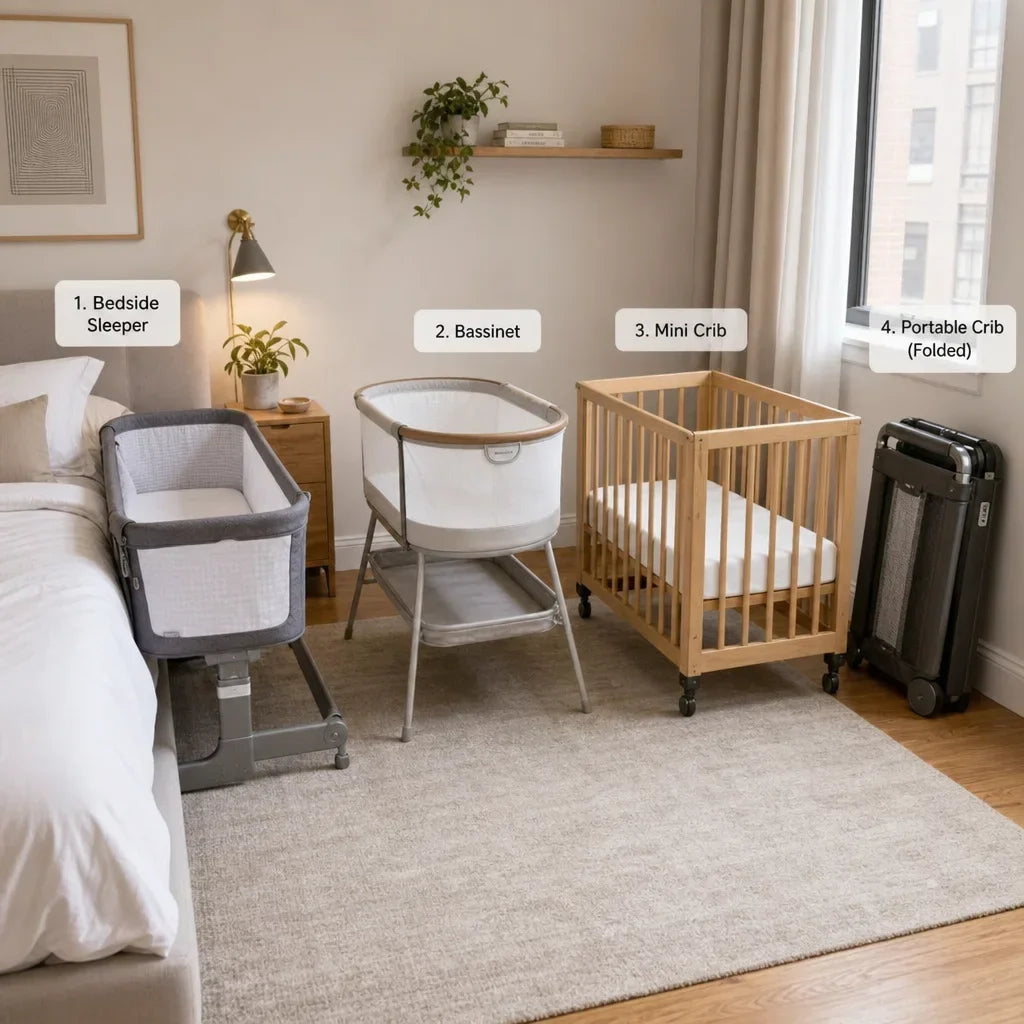
The best crib for a small room is usually not the smallest one. It is the one that fits your room, your baby's stage, and your plan for the next few months or years.
If you are comparing cribs for small rooms in Canada, start with function first. A bedside sleeper or bassinet usually makes the most sense for newborn room-sharing and easiest night access. A mini crib is often the best middle ground for longer use in tight spaces. A portable crib can work well for temporary setups, grandparents, or travel. A compact convertible can be smart if you want more years from one purchase, but some take up almost as much floor space as a standard crib. A full-size crib is still a good option if the room truly fits it without creating a cramped or unsafe layout. Your actual choice depends on the product dimensions, mattress fit, room layout, and current safety guidance. This is general information, not a recommendation for your specific setup.
Best crib for a small room: quick answer by room type
A small shared bedroom usually works best with a bedside sleeper, bassinet, or mini crib because those options are built for tight footprints and easier parent access. Bedside sleepers and bassinets are generally used from birth to about 5–6 months, depending on the model's limits . Mini cribs usually give you a longer use window than that category, while still taking less space than many full-size cribs. That is why the best crib for a small room is often a mini crib if you want one main sleep space beyond the newborn stage.
A tiny nursery often works best with a mini crib or a truly compact convertible because they balance footprint and everyday function. Typical mini crib exteriors are often about 38–43 inches long, while many full-size cribs are about 52–55 inches long, depending on the model . That difference matters in condos, apartments, and older homes where every few inches affect door swing, dresser access, and walking space.
A guest room, grandparent room, or multi-use space often works best with a portable crib for small spaces because foldability and mobility matter more than furniture styling. Portable models are useful when the crib is not the room's permanent focal point. They are also easier to store when the room needs to switch back to another purpose.
A small room that must last into toddler years can suit a compact convertible crib, but only if you compare the assembled footprint, not the label. Some convertible cribs for small spaces are only slightly smaller than full-size models. I would compare the outside dimensions, mattress size, and how much room the conversion pieces need before buying.
Mini crib vs bedside crib vs bassinet vs portable crib vs full-size crib
The right crib type depends on how long you need it, whether you are room-sharing, and how much floor space you can give up. The table below is the fastest way to compare crib options for small spaces.
| Crib type | Best for | Typical use period | Room-sharing | Portability | Storage/foldability | Main drawback |
|---|---|---|---|---|---|---|
| Bedside sleeper | Newborn night access | Birth to about 5–6 months, product-specific | Excellent | Moderate | Some fold | Shortest usable stage |
| Bassinet | Newborn sleep in tight rooms | Birth to about 5–6 months, product-specific | Excellent | Often easy | Often compact | Outgrown quickly |
| Mini crib | Small nurseries and longer room-sharing | Product-specific; often longer than a bassinet | Very good | Often good | Some fold or roll | Shorter lifespan than many full-size cribs |
| Portable crib | Travel, guest room, grandparents | Product-specific | Good | Excellent | Usually strong | May feel less furniture-like |
| Full-size crib | Longest single-crib use | Product-specific | Good if room fits | Low | Rare | Largest footprint |
| Compact convertible crib | Longevity in small rooms | Product-specific | Good if footprint fits | Low to moderate | Rare | Some are not very compact |
A bedside crib for small spaces is strongest when you want close access for feeding and checks during the newborn stage. A bedside crib and a co-sleeper are not always the same thing. Some bedside sleepers attach or align to the adult bed under specific manufacturer instructions, while others simply sit nearby. I would follow the manual exactly, because attachment systems and height alignment are product-specific.
A mini crib is often the best mini crib for small spaces when you need more than a few months of use but cannot fit a standard crib well. It gives more structure and longevity than a bassinet, and it usually looks and functions more like nursery furniture. The trade-off is that mattress and sheet fit can be less straightforward than with full-size cribs.
A full-size crib for small spaces only makes sense when the room can still support safe placement and easy access. The longer use can make it a better long-term value, but not if it blocks drawers, crowds the bed, or forces unsafe placement near hazards. Chasing longevity while ignoring room function is how small bedrooms start feeling unusable.
Are mini cribs worth it? Pros, drawbacks, and who should buy one
Yes, mini cribs are worth it when your room is small and you want more staying power than a bassinet. That is why so many parents looking for the best small cribs for small spaces end up choosing a mini model. In condos, apartments, shared bedrooms, and secondary sleep spaces, they often solve the layout problem without pushing you into a short-use newborn-only option.
The main benefits are clear: a smaller footprint, easier room layouts, and often better mobility than standard furniture cribs. Some mini cribs come with wheels, and some fold for storage. In a small crib for bedroom setup, those details matter as much as the style.
The drawbacks are also real. A mini crib may be outgrown sooner than a full-size crib, especially for a taller or very active child. Mattress and sheet sizing can be less standardized across brands and models. Some offer fewer conversion options than larger convertible cribs. That does not make a mini crib a bad purchase. It means you need to buy for your timeline, not just your floor plan.
A mini crib is not too small for a baby when it is used within the manufacturer's limits and with the correct mattress. A newborn can sleep in a mini crib if the crib is designed for newborn use, assembled correctly, and paired with the proper mattress fit. I would not give a blanket answer on how long a baby can stay in a mini crib or whether a 2-year-old can use one, because those limits are product-specific and depend on the child's size and development. Check the manual, not social media.
What size crib is best for small spaces?
The best size crib for small spaces is the smallest crib that still fits your baby's stage and your expected use period safely. In practice, that usually means a bassinet or bedside sleeper for short-term newborn room-sharing, a mini crib for a tighter room that needs more months of use, or a compact full-size or convertible crib if you truly have the floor space.
The label on the box matters less than the assembled outside dimensions. Two cribs sold as mini may not take up the same amount of room. A compact convertible may still sit close to full-size dimensions. Wheels, drawers, and conversion kits can all add practical space demands even if the sleeping surface itself looks small.
A small crib Canada shoppers should consider first is the one that leaves room for real life around it. You still need to open the bedroom door, move around the bed, reach the closet, and change the sheets without scraping your hands against a wall. A crib that technically fits on paper can still be the wrong choice if the room stops functioning.
How to measure a small room before buying a crib

You can tell if a crib will fit by measuring the room like a floor plan, not like a product page. Start with the full wall lengths, then add the footprint of every fixed or large piece already in the room: bed, dresser, chair, radiator, vent, and closet swing. Then mark where the door opens and where you need to walk every day.
The most useful step is to tape the crib's assembled footprint on the floor before you order. Measure the assembled dimensions, not just the mattress size and not the shipping carton. A small bedroom with crib plans usually fail because people measure the sleep surface but forget the frame, feet, or drawer overhang.
Use this room-measuring checklist before buying:
- Wall length and width
- Door swing and closet door clearance
- Window reach and blind or curtain cord location
- Bed footprint if you need a crib and bed in small room
- Dresser width and drawer pull-out space
- Radiator, vent, and baseboard heater locations
- Hallway, stair, and elevator access for delivery
- One practical side for sheet changes and baby access
A condo or apartment setup needs one more check: can the crib parts get into the room at all. Narrow hallways, tight corners, stair turns, and elevators can block delivery even when the room itself is big enough. That is one reason many parents shopping cribs for tiny spaces prefer compact designs they can visualize in person first.
Where to put a crib in a small room and where not to put it

The best place for a crib in a small room is the spot that gives safe access, good airflow, and distance from obvious hazards. In most rooms, that means away from dangling cords, blinds, heaters, radiators, and unstable shelves or wall decor. The safest location is not always the prettiest wall.
A crib should not be placed under heavy shelves, next to window cords, tight against furniture that could create a trapping risk, or where it blocks the room exit. If the room runs warm, avoid placing the crib beside heat sources. If you are using a bedside sleeper, follow the manufacturer's setup instructions exactly and keep the sleep surface flat and uncluttered.
The reason people say a crib should be away from the wall is practical safety, not decorating style. Walls can create cleaning blind spots, trap cords or fabric behind the crib, and make access harder if the crib is jammed into a corner. I tell parents to think about how they will lift the baby, change sheets, inspect the mattress fit, and vacuum behind the crib. Those day-to-day tasks affect safety too.
> Safety callout > Buy new when possible. Use only the mattress size and thickness the crib manual allows. Avoid soft add-ons, poor-fitting sheets, and any setup that blocks safe access. For Canadian shoppers, check current guidance from the product manufacturer and the relevant government safety source before buying or assembling a crib. This is general information, not medical or legal advice.
Real small-room layouts: crib and bed in the same room

A queen bed and crib in a small room usually works best when the crib sits on the side of the bed with the clearest walkway, not at the foot of the bed. That preserves the room entry and gives one adult a cleaner path for night checks. In this setup, skip bulky accent furniture and use vertical storage or a smaller dresser instead.
A twin bed and crib in a small room gives you more flexibility because the bed footprint is smaller. The usual layout win is placing the twin against the longest wall and keeping the crib on the opposite wall or in the corner with the safest access. That can work especially well in a nursery-guest room, where a twin or daybed doubles as seating.
Parents sharing small room with baby ideas usually work best when the sleep zone is simplified. If the baby is in your room for the newborn stage, a bedside sleeper or small bassinet for small spaces often keeps the room most functional. Once that stage passes, a mini crib is usually the better move if you still need room-sharing without making the bedroom feel packed.
A room with a crib and bed feels less cramped when you cut duplicate furniture. A dresser with a change pad on top can replace a separate change table. Safe wall shelving can replace a wide bookcase. A slim hamper or under-bed storage can free floor space without crowding the crib zone.
These hypothetical layouts help as planning examples, not as guaranteed fit guides. A 9x9 room can behave very differently from another 9x9 room once closets, windows, and door swings are included. That is why measuring the actual room beats copying a mood board.
What features matter most in a space-saving crib

The best space saving cribs solve more than floor space. In a small home, the most useful features are a narrow footprint, lockable wheels, simple assembly, accessible mattress-height adjustment, and easy sheet changes. A crib that is hard to clean around or awkward to reach can become frustrating fast.
Wheels are helpful when they are lockable and the floor is level. That is why some of the best cribs with wheels work well in condos, shared rooms, and grandparent homes. Mobility matters most when you may need to shift the crib for cleaning, delivery access, or temporary room changes.
Storage can help, but it is not automatically a win. A small crib with storage or under-crib drawers may save dresser space, yet it can also increase the real footprint, complicate assembly, and make cleaning underneath harder. I would compare the outer dimensions with and without the drawer area in mind, because the storage feature can change how the room functions.
Parent ergonomics count in small spaces too. Shorter caregivers may care more about side height and reach. Families doing frequent night feeds may care more about bedside access than about extra storage. The right feature set depends on how you actually use the room at 2 a.m., not how the crib looks in a styled photo.
Crib mattress fit, sheet sizing, and what to avoid

Mattress fit matters as much as crib size, especially with mini cribs. Mini crib mattress sizing can vary by brand or model, so you should match the mattress exactly to the crib manual. Do not assume one mini crib mattress fits every mini crib.
The mattress and sheet choice should follow the manufacturer's stated size and thickness limits. A poor fit can leave gaps or create bunching at the corners. That is one reason parents comparing the best mini cribs for small spaces should look beyond the frame itself and confirm mattress compatibility before they buy.
What to avoid in a crib mattress setup is straightforward: overly soft surfaces, poor-fitting sheets, aftermarket add-ons not approved by the manufacturer, and any mattress that does not fit the crib properly. The same rule applies whether you are buying a full-size crib for small spaces or the best mini crib for small spaces Canada shoppers can find.
A crib mattress can affect comfort preferences and material sensitivities, but no mattress can promise to prevent allergies. Some families prefer materials and certifications associated with lower VOC exposure, but sensitivities vary and product claims should be read carefully. I would focus on fit, firmness as specified by the manufacturer, and verified product information rather than marketing language.
Safety standards and certifications to look for in Canada
For a small crib Canada purchase, the practical safety steps matter more than chasing labels alone. Buy new when possible, assemble the crib exactly as instructed, use the intended mattress, and avoid used products with missing parts or unknown history. In tight rooms, these basics matter even more because folding hardware, wheels, and bedside attachment systems leave less margin for setup mistakes.
Mandatory safety compliance and optional third-party certifications are not the same thing. A crib sold in Canada should meet applicable Canadian requirements, while labels such as GREENGUARD Gold or JPMA are additional claims or certifications that may provide extra information about testing or emissions, depending on the product and the certifier . Shoppers should confirm what a specific certification actually covers and whether it applies to the exact model they are considering.
I would be cautious about relying on U.S. crib advice as if it were Canadian law. Some guidance overlaps, but regulations and product availability are not always identical. For current rules, check the manufacturer, product listing, and the relevant Canadian government safety source.
Best crib choices by use case
The best crib choices for small spaces are easier to judge by use case than by fake overall rankings. If you want the best bedside crib for small spaces Canada shoppers usually look for, focus on newborn room-sharing, easy night access, and a setup that follows the manufacturer's bedside instructions exactly.
If you want the smallest practical footprint, a mini crib is usually the first category to compare. The best mini crib for small spaces Canada buyers should consider is the one with verified mattress fit, a footprint that truly works in the room, and features they will actually use, such as wheels or foldability. Smallest on paper is not always best in daily use.
If you want the longest value from one crib, compare compact convertible cribs against full-size options carefully. Some convertible models are smart small-space choices. Others are marketed as compact but use nearly the same floor area as a standard crib. Compare outside dimensions, not product names.
If you want a crib for grandparents, guests, or occasional use, a portable crib for small spaces often makes the most sense. Foldability and storage are the priority there. If you want a furniture look in a small nursery, a mini crib or truly compact convertible usually fits better.
If you want help comparing compact crib options in person, Baby Warehouse has served Toronto families since 1995 and offers in-store and virtual consultations, plus Canada-wide delivery . That can help when you need to compare dimensions, mattress fit, and layout ideas before ordering.
When a mini crib is not the best choice
A mini crib is not the best choice when your main goal is the longest possible use from one bed and the room can safely fit a compact full-size or convertible crib. In that case, the small savings in floor space may not outweigh the shorter usable stage.
A mini crib can also be the wrong fit if you are buying for a bigger or faster-growing child and want to avoid changing sleep furniture sooner. The issue is not that mini cribs are bad. The issue is that your timeline may not match the product category.
The best alternative to a small crib depends on why the mini option falls short. A bassinet or bedside sleeper is a better short-term solution for pure newborn room-sharing. A compact full-size crib is better if you want more long-term value and the room supports it. A portable crib is better if the setup is occasional, mobile, or shared across homes.
FAQ
What is the best crib for a small room?
A mini crib is usually the best all-around choice for a small room because it balances a compact footprint with longer use than a bassinet. A bedside sleeper or bassinet is often better for the newborn months if you are room-sharing and want the easiest night access.
What size crib is best for small spaces?
The best size is the smallest one that safely fits your baby's stage and your intended use period. In many homes, that means a mini crib for everyday use in a tight room, or a bedside sleeper for the newborn stage.
Are mini cribs worth it?
Yes, if you need a real crib in a tighter footprint. They are especially useful in condos, apartments, shared bedrooms, and secondary sleep spaces.
Are mini cribs safe for newborns?
They can be, if the model is designed for newborn use, assembled correctly, and used with the proper mattress. Follow the manufacturer's instructions and limits for the exact crib.
How long can a baby stay in a mini crib?
There is no single timeline that fits every crib. The usable period depends on the model's limits and the child's size and development, so check the product manual.
What are the drawbacks of using a small crib?
The main drawbacks are shorter usable life for some children, less room for older or taller babies, and possible mattress or sheet fit complications. Some small cribs also offer fewer conversion options.
Where should I put a crib in a small room?
Place it where you can reach it easily and where it stays away from cords, heaters, unstable wall items, and blocked exits. Safe access matters more than symmetry.
Where should I not place a baby crib?
Avoid placing a crib under heavy shelves, beside dangling window cords, tight against furniture that creates trapping risks, or beside heat sources if the room runs warm.
How do I fit a bed and crib in a small room?
Measure the full room, tape the crib footprint on the floor, and remove duplicate furniture where possible. A dresser with a change pad often works better than adding a separate change table.
What is the difference between a bedside crib and a co-sleeper?
The terms are often used loosely, but they do not always mean the same thing. Some bedside sleepers are designed to attach or align to the adult bed under specific instructions, while others simply sit nearby.
What are the alternatives to a bedside crib?
A bassinet, mini crib, portable crib, or compact full-size crib can all work depending on the room and how long you need the setup to last. The best alternative depends on whether you prioritize night access, longevity, or storage.
What should I avoid in a crib mattress?
Avoid soft surfaces, poor fit, loose sheets, and add-ons not approved by the manufacturer. Match the mattress and sheet size exactly to the crib model.
Are there good crib options for small spaces in Canada?
Yes. Canadian shoppers can choose from bassinets, bedside sleepers, mini cribs, portable cribs, and compact convertibles. The best cribs for small spaces Canada families should consider are the ones with verified dimensions, proper mattress compatibility, and a layout that still lets the room work.
If you are between two sizes, measure first and compare the penalty of a bad layout, not just the promise of a longer-lasting crib. Seeing compact options in person or through a virtual planning appointment is often the fastest way to decide what actually fits.


