

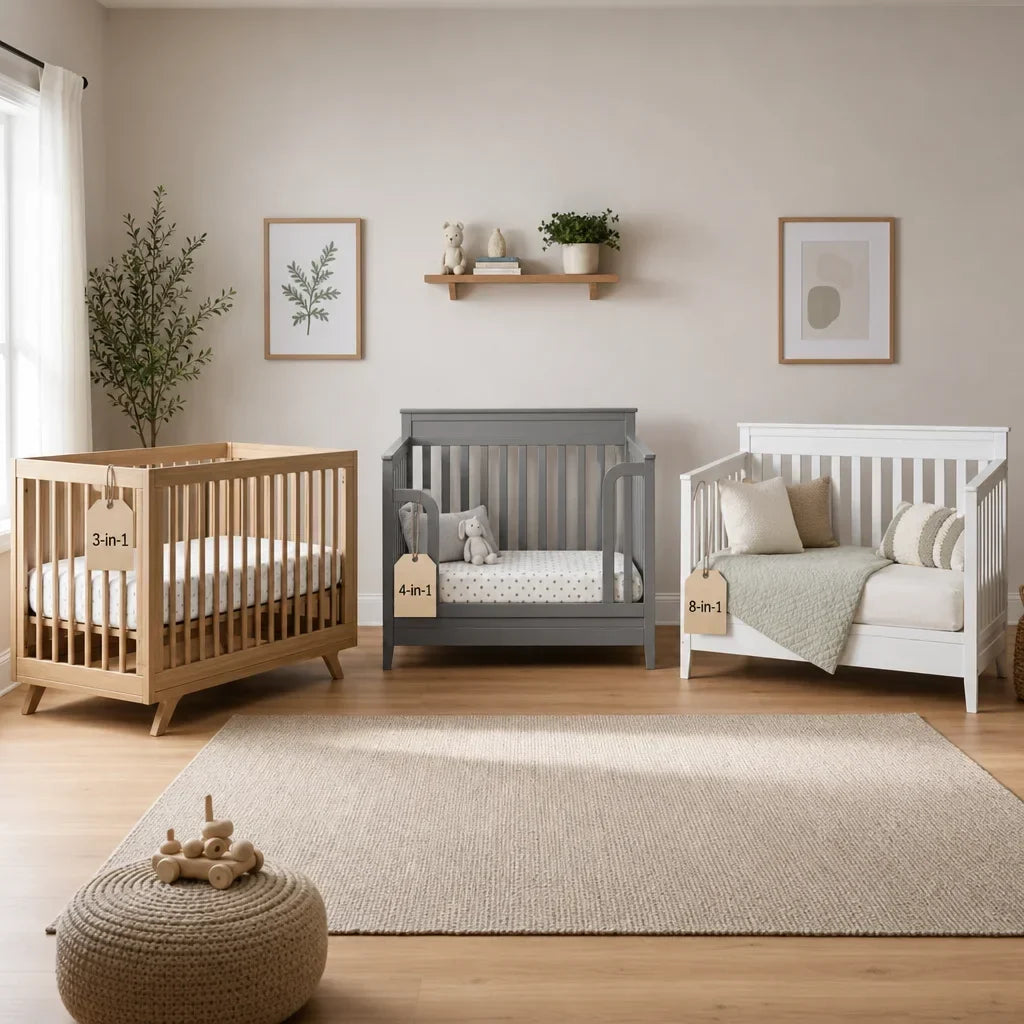
Most people assume a convertible crib always replaces every future bed. It does not. This convertible crib guide starts with the part that saves the most regret later: stage names are marketing labels, and the only answer that matters is what that specific crib converts into.
What Is a Convertible Crib?
A convertible crib is a crib designed to change into one or more later bed stages using the same main frame. In plain terms, the crib you buy for a baby may later become a toddler bed conversion, a daybed conversion, or a bigger bed, depending on the model.
A standard crib can be non-convertible or convertible. A mini convertible crib is simply a smaller-format crib that may also convert later, but it uses a different footprint and usually a different mattress size. The word convertible does not tell you the size. It tells you the crib has planned later-stage uses.
The real value is longer use from one furniture purchase, but only if the conversion path matches your home and your plans. Families usually get the most from this style when they want better long-term value, a coordinated nursery look, and fewer furniture swaps over time.
Convertible Crib Types Explained: 2-in-1, 3-in-1, 4-in-1, 5-in-1 and 8-in-1
The numbers on convertible cribs are not fully standardized across brands. A 3-in-1 crib from one maker may not convert the same way as another 3-in-1, and an all stages crib or 8-in-1 crib may count several setup variations rather than eight completely different furniture pieces.
The safest way to read these labels is to treat them as a stage count, not a universal rule. You want the product page or manual to show the exact path, the hardware required, and whether rails are included or sold separately.
| Label | What it commonly means | What to verify before buying |
|---|---|---|
| 2-in-1 crib | Usually crib + one later stage, often toddler bed or daybed | Which second stage is included |
| 3-in-1 crib | Usually crib + toddler bed + daybed | Whether toddler rail is included |
| 4-in-1 crib | Often crib + toddler bed + daybed + full-size bed | Whether a full-size bed conversion kit is needed |
| 5-in-1 crib | Often a 4-stage crib with one extra configuration counted | Which setup counts as the fifth mode |
| 8-in-1 crib | Often multiple configurations grouped into one marketing label | Whether the extra counts are real stage changes or layout variations |
A 4-in-1 crib is the label many families search for because it often covers the broadest practical path. That usually means crib, toddler bed, daybed, and later full-size bed, but not always. If you are comparing products, check whether the headboard and footboard are reused, whether standard bed rails are included, and whether the listing says full-size bed conversion kit separately.
Mini Convertible Crib vs Standard Convertible Crib

A mini convertible crib is usually the better fit for condos, shared bedrooms, and short-term nursery plans. A standard crib is usually the better fit for families who want the longest crib-use window and the easiest mattress shopping.
The tradeoff is simple. A mini crib saves floor space, but it may give you a shorter usable period before your child looks or feels cramped. A standard convertible crib takes more room now, but it usually delays the next furniture purchase and gives you more choices in a full-size crib mattress.
The better buy depends on how long you plan to stay in that home and how temporary the nursery setup is. If the crib will live in your room for the first stretch, or the nursery is really a corner of another room, mini can be smart. If you already have a nursery and want one crib to carry more of the journey, buying one convertible crib now usually makes more sense than buying mini first and upgrading later.
The mattress question matters here too. Mini and standard are not interchangeable categories. A mini crib mattress is not the same as a full-size crib mattress, so you need to match the exact crib format and the manufacturer instructions.
How to Measure Your Nursery Before You Buy

The most useful room-planning step is checking assembled dimensions, not shipping-box dimensions. A crib can look compact online and still block a dresser, closet door, or walking path once it is built.
Start with wall-to-wall room measurements. Then mark the crib footprint on the floor with painter's tape. After that, add the pieces people forget: door swing, dresser drawer clearance, closet access, glider space, and enough open path to move around the crib without squeezing past furniture.
A small nursery crib fit is not just about whether the crib physically enters the room. It also needs to work at 2 a.m. with a laundry basket in the corner and a parent standing beside it. In a condo nursery, tape-marking the floor is usually the fastest way to catch layout mistakes before ordering.
Future conversion matters too. If the crib may become a toddler bed or daybed later, picture how the room will function with the open side and with a child climbing in and out. If the product may later become a bigger bed, make sure the room plan still makes sense years later rather than only during the nursery stage.
Room-measuring checklist
- Measure the room wall to wall.
- Measure the doorway and tight hallway turns.
- Use assembled product dimensions, not carton dimensions.
- Tape the crib footprint on the floor.
- Check dresser drawers and closet-door swing.
- Leave a practical walking path around the crib.
- Think ahead to toddler bed conversion and later furniture layout.
When to Convert a Crib: Baby to Toddler Bed to Big Kid Bed

Most crib transitions happen based on safety and behaviour, not a birthday. The commonly discussed window for moving from crib to toddler bed is about 18 months to 3.5 years , but the right time depends more on climbing, attempts to get out, sleep disruption, and the guidance in your crib manual than on age alone.
The clearest sign to convert now is repeated climbing or attempts to get over the rail. Once confinement is turning into an escape game, the crib is no longer doing its job safely. A child who sleeps well, stays put, and is not trying to climb may be better off staying in the crib longer.
A toddler bed conversion is the first big shift for most families. A daybed conversion usually comes later and is more about easy in-and-out access than containment. A full-size bed conversion is usually a separate later move once your child is clearly done with toddler furniture.
Big kid bed readiness is less about pride and more about routine. Children tend to manage the jump better when they can follow simple bedtime instructions, stay in bed most nights, and understand the room rules. If they still roam constantly or treat bedtime as play, keeping the crib stage a bit longer can be the easier choice when it remains safe.
Stay in crib vs convert now
Stay in the crib if:
- sleep is going well
- your child is not climbing
- the crib still fits their current stage
- the lower mattress height is already in place
Convert now if:
- your child is trying to climb out
- getting in and out is becoming unsafe
- bedtime battles are tied to crib confinement
- your manual supports the next stage and you have the right parts
Convertible Crib Safety: What Standards and Features Matter

The safest approach is to buy a crib that meets current crib safety standards from a reputable North American manufacturer and to assemble it exactly as directed. We would not treat a crib as safe based on looks alone, because sturdy construction, fixed sides, secure hardware, and model-specific instructions matter more than style.
One practical feature people underrate is mattress height adjustability. Higher positions help in the newborn stage. Lower positions matter once a baby becomes more mobile. That change reduces the chance of climbing and makes the crib safer as movement increases.
A firm mattress with a fitted sheet only is the basic safe sleep setup most families should follow. Loose blankets, bumpers, pillows, and plush accessories do not belong in the crib. Proper crib mattress fit matters just as much. The mattress should match the crib format and the manufacturer's instructions so you do not create unsafe gaps.
Low-emissions materials can matter for families who care about indoor air quality. A GREENGUARD Gold crib is commonly marketed as tested for low chemical emissions, and that certification is often associated with screening for more than 10,000 chemicals . The exact certification language should always come from the manufacturer or certifier, but the plain-English point is simple: some families prefer a crib with third-party low-emissions testing rather than taking finishes on faith.
A non-toxic crib usually means parents are looking for materials and finishes with lower chemical concerns, not just a nice label. Solid construction, a reputable finish, and transparent product information are more useful than broad marketing language. If a retailer cannot explain the finish, certification, or testing, keep shopping.
What Mattress Do You Need for a Convertible Crib?

The right mattress depends first on whether the crib is mini or standard, and second on which stage you are using. For the crib stage, families usually need either a mini crib mattress or a full-size crib mattress that matches the exact crib type and fits as directed in the manual.
Firmness comes before convenience features. Waterproof covers, dual-sided marketing, and fancy quilting are secondary if the mattress does not meet the crib's size and fit requirements. Crib mattress fit is the real priority because a poor fit can create gaps at the sides.
One crib may use more than one mattress over its life. A standard pattern is one mattress for the crib stage and toddler or daybed stage, then a completely different mattress if the furniture later becomes a full-size bed. That means some families need 1 to 2 mattresses over time , while others may need more only if they switch from mini to standard furniture later.
Mattress checklist
- Match the mattress to mini or standard crib format.
- Follow the manufacturer instructions for fit.
- Choose firm support for the crib stage.
- Use the crib mattress for toddler or daybed stages only if the manual allows it.
- Plan for a different mattress if the crib later becomes a full-size bed.
Conversion Kits, Toddler Rails, and What’s Included

Many convertible cribs need extra parts for later stages, and those parts are not always in the box. A toddler rail, guard rail, or full-size bed conversion kit may be included, optional, or sold separately depending on the model.
This is where a lot of families overspend by surprise. The crib price can look reasonable, but the total ownership cost changes once you add a toddler rail now and bed rails years later. That is why the included-parts list matters as much as the stage count on the carton.
The smartest move is to confirm future parts before checkout. If the product is a 4-in-1 convertible crib, ask whether the toddler conversion hardware is already packed in, whether the full-size bed conversion kit is sold separately, and whether the model is likely to stay current long enough for you to order matching parts later. If a rail is available today, some families buy it early and store it with the manual.
Do not mix parts across crib brands or different model numbers. Even if a rail looks close, that does not make it compatible. The safe rule is simple: use only the parts listed for that exact crib model.
Conversion kit checklist
- Confirm every stage the crib actually supports.
- Ask which parts are included in the box.
- Ask which parts are optional or sold separately.
- Save all hardware after assembly.
- Label extra pieces and keep them in one bag.
- Save the model-specific manual.
- Do not use rails from another model or brand.
Is a Convertible Crib Worth It? Cost, Lifespan, and Total Ownership Value

A convertible crib can be worth it when the conversion path matches how your family will really use it. It is less compelling when the room is tiny, a move is coming soon, or the later full-size stage is unlikely to happen.
The up-front price is usually higher than a simple crib, but the better comparison is total ownership cost. That includes the crib itself, the mattress plan, any toddler rail, any full-size bed conversion kit, and whether you will still want that same headboard and finish years from now.
Market pricing varies widely, but convertible cribs commonly land in roughly the mid-hundreds to low four figures depending on materials, brand, and included conversion parts . Conversion kits and later mattresses add to that. That is why the cheaper-looking crib is not always the lower-cost path over time.
The best value shows up in a few common cases. A family with one nursery and a long-term plan often gets strong value from a 3-in-1 crib or 4-in-1 crib. A small-space family may get better value from a mini convertible crib only if the space savings solve a real layout problem. A family that expects to redecorate completely later may get less value from paying extra for full-size conversion they may never use.
Pros and cons of convertible cribs
Pros
- longer potential lifespan from one main frame
- nursery style can carry forward into later stages
- fewer furniture replacements in some homes
- can be a strong value if later stages get used
Cons
- higher up-front cost than some standard crib options
- conversion kits may add later expense
- some families never use every advertised stage
- manuals and replacement parts can be harder to find years later
- the crib still needs to fit your future room plan
Value snapshot by crib type
| Type | Best for | Value strength | Watch-outs |
|---|---|---|---|
| Mini convertible | condos, shared rooms, temporary nursery setups | saves floor space now | shorter use window, different mattress size |
| 3-in-1 or 4-in-1 | most families planning ahead | strongest practical long-term value | confirm included rails and future kit cost |
| All-stages or 8-in-1 | shoppers focused on maximum flexibility | can cover many setups on paper | marketing labels vary, extra stages may be minor variations |
How to Choose the Right Convertible Crib for Your Family
The best crib is the one that fits five things at once: room size, expected years of use, safety priorities, style longevity, and budget. If one of those is off, the crib will feel like a compromise no matter how nice it looks online.
For a first baby in a condo, footprint usually comes first. For a larger nursery with a long-term plan, standard size and future conversion options usually matter more. For grandparents furnishing a guest room, ease of use and simple assembly may matter more than full-size conversion years later. For low-tox shoppers, finish transparency and certifications may sit at the top of the list.
Neutral finishes can help a crib last visually through more room changes, but they are not a rule. The smarter test is whether you would still want that finish when the nursery theme is gone. A crib that looks timeless at year 1 is more likely to feel worth converting at year 4 or year 7.
Construction quality is easier to judge in person than on a product thumbnail. Hardware sturdiness, finish consistency, and how solid the frame feels can be hard to compare online. For Toronto and GTA families, seeing baby furniture Toronto shoppers often compare side by side in a showroom can make the footprint and finish easier to judge. For Canada-wide shoppers, a virtual consultation is useful when you want help checking dimensions, materials, and conversion parts before ordering.
Common Convertible Crib Problems and How to Avoid Them
Most common convertible crib problems are preventable at the buying and assembly stage. Wobble, odor, missing hardware, difficult conversions, and a confusing crib manual usually trace back to one of three issues: weak documentation, parts not stored properly, or assumptions that one model works like another.
Crib wobble is usually an assembly or hardware issue first, not a reason to start swapping third-party parts. Tightening the correct hardware in the right order, placing the crib on a level floor, and rechecking the frame after initial use are the first steps. If wobble continues, stop using the crib until the manufacturer or retailer helps confirm the cause.
Finish odor is worth paying attention to, but it should be handled practically. Airing out a new crib in a ventilated room before use is common. If an odor is strong, persistent, or concerning, contact the retailer or manufacturer and ask about the finish and certification rather than guessing.
Confusing manuals create a lot of avoidable frustration. Keep the box label, the product name, the model number, and all leftover hardware together from day one. Families who lose that information often struggle later when it is time for toddler bed conversion or when they need replacement crib parts.
The biggest mistake is trying a rail or hardware from another crib brand because it seems close enough. It is not worth the risk. Parts should never be assumed compatible across brands or across different models from the same brand.
Where to Find Assembly Instructions, Manuals, and Older-Model Support
The safest way to find crib instructions manuals online PDF files is to start with the exact brand, collection name, and model number from the product label. A search for 4-in-1 Convertible Crib instructions without the model number often leads to the wrong manual.
If you are trying to locate a convertible crib guide PDF or assembly sheet, use the official manufacturer support page first. If the model is older or hard to identify, contact the retailer with photos of the crib, the label, and any paperwork you still have. That gives you the best chance of finding the right manual or learning whether support is still available.
Discontinued cribs are the hardest cases. Manuals may still exist online, but replacement parts and matching rails may no longer be stocked. That is another reason we tell families to save the instructions, all hardware, and the purchase details the day the crib is assembled.
Manual and support help box
- Find the label on the crib or old carton.
- Write down the brand, collection name, and model number.
- Search the official manufacturer site first.
- Use exact terms, not just “4-in-1 crib manual.”
- Keep photos of the crib and hardware if support is needed.
- Ask the retailer for help identifying older models when possible.
- Do not download a manual that only looks similar.
FAQ: Quick Answers About Convertible Cribs
What is a convertible crib?
A convertible crib is a crib built to change into one or more later bed stages using the same core frame. The later stages vary by model, so always check the exact conversion path.
Is a convertible crib worth it?
It can be. The best value usually comes when you have the room, plan to use later stages, and understand the cost of any conversion kits before buying.
What is the difference between a 3-in-1 and a 4-in-1 crib?
A 4-in-1 crib usually adds one more stage than a 3-in-1, often a full-size bed option. The exact meaning is not standardized across brands, so verify the listed stages and included parts.
Do all convertible cribs need a conversion kit?
No. Some include rails or hardware for certain stages, and some sell them separately. You need to check what is in the box for that exact model.
When should I convert my crib to a toddler bed?
The commonly discussed timing is about 18 months to 3.5 years , but safety cues matter more than age. Repeated climbing and escape attempts are stronger signals than a birthday.
Are mini convertible cribs good for small spaces?
Yes, they often work well in condos, apartments, and shared rooms. The tradeoff is a smaller sleep space and often a shorter useful window before the next bed stage.
What mattress should I use with a convertible crib?
Use the exact mattress type the crib was designed for, either mini or standard, and follow the manual for fit. For later full-size bed conversion, you will need a different mattress.
How do I know if my child is ready for a big kid bed?
Readiness usually shows up in behaviour. Children tend to do better when they can follow bedtime routines, stay in bed reasonably well, and are clearly done with crib containment.
Can I use a rail or parts from another crib brand?
No. Parts should only be used if they are approved for that exact model. Similar-looking rails are not a safe substitute.
Where can I find my crib manual or assembly instructions?
Start with the model number on the crib label and search the manufacturer's official support page. If the crib is older, a retailer may be able to help identify it, but discontinued models can be harder to support.
If you are narrowing down a crib now, bring your room measurements, budget, and preferred conversion path. That makes it much easier to compare options in a showroom or through a virtual consultation without paying for stages you will never use.


