

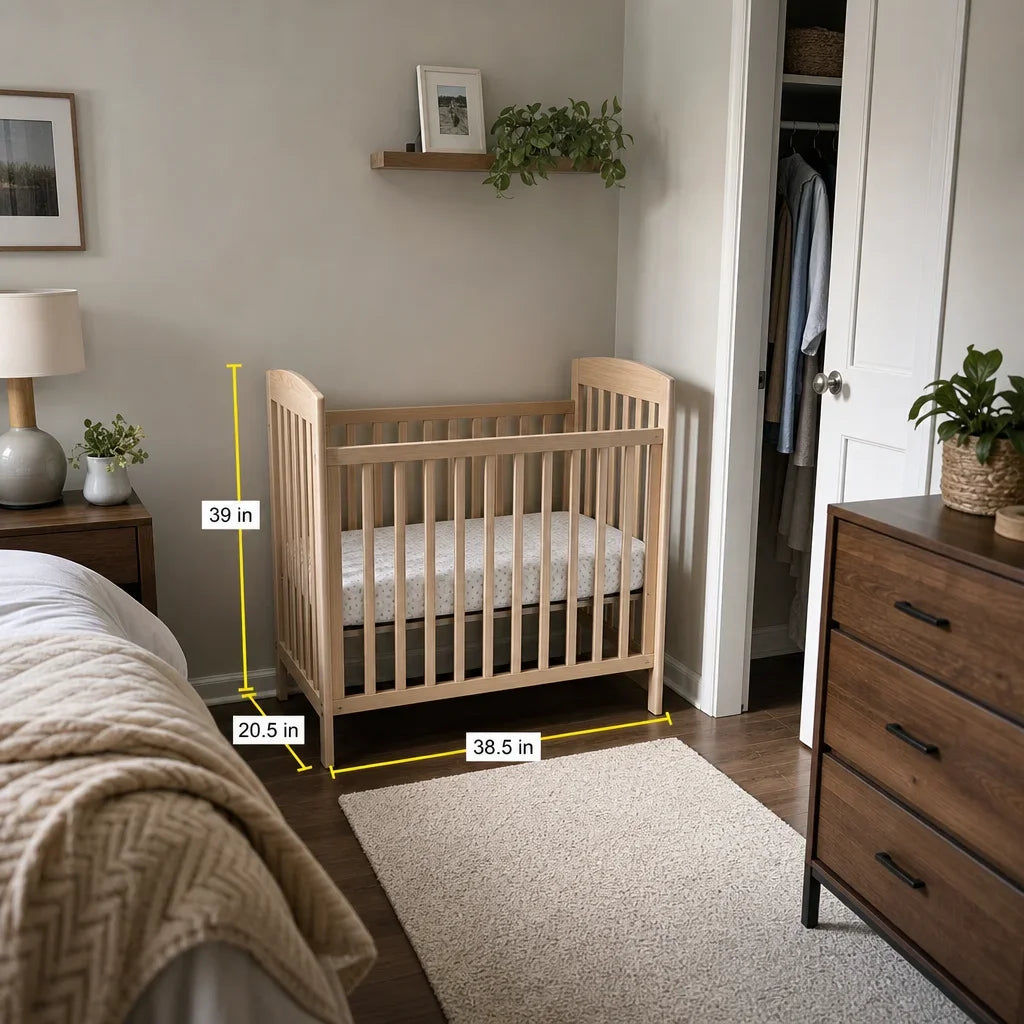
The best crib for a small apartment is usually the one that fits your room, your sleep setup, and your exit paths without crowding the space. For most families, that means a mini crib for the smallest footprint, a portable crib for flexibility, or a compact convertible crib if long-term use matters more than shaving off every inch.
Best crib for a small apartment: quick answer
There is no single best crib for small apartment living because studios, one-bedroom rentals, and condo nurseries work differently. The right choice depends on whether baby will room-share, whether you need to move the crib, and whether you want one crib for months or for years.
A mini crib is usually the best crib for apartment living when floor space is tight. Its footprint is commonly about 38–43 inches long by 24–28 inches wide, which makes it easier to fit beside a bed, into a nursery nook, or in a shared room.
A portable crib for small spaces is usually the best choice when you need foldability or easy movement. Some portable models roll or fold, but everyday sleep suitability is model-specific and must be confirmed with the manufacturer rather than assumed from the label.
A full-size crib for small spaces only makes sense when the room truly fits it. Full-size cribs are commonly about 52–55 inches long by 28–31 inches wide, so they offer longer use but can dominate a small bedroom.
A compact convertible crib for apartment use can be the best value if you want toddler-bed conversion later. The tradeoff is bulk, extra parts, and sometimes separate conversion kits that need storage in an already small home.
| Living situation | Usually the best fit | Why it works | Main tradeoff |
|---|---|---|---|
| Studio apartment | Mini crib | Smallest footprint | Can be outgrown sooner |
| One-bedroom shared room | Mini or portable crib | Better beside-bed flexibility | Less long-term room than full-size |
| Condo with second bedroom | Compact convertible or full-size crib | Better longevity | Takes more floor space |
| Office/guest room combo | Portable or mini crib | Easier to reclaim space | Check overnight-sleep approval |
| Budget-focused buyer | Mini crib or simple full-size crib | Lower upfront size burden | Value depends on how long it lasts |
| Long-term value buyer | Convertible crib | Fewer furniture changes later | Heavier and harder to move |
Mini crib vs portable crib vs full-size crib: which works best in an apartment?
A mini crib is usually the best cribs-for-apartments category when the room is tight and the crib will stay in one spot. Mini models save floor space, often look cleaner in condos, and are easier to work into shared bedrooms.
A portable crib works best when flexibility matters more than lifespan. It can suit a guest room, office combo, or a family that needs to move the crib between rooms, but you need to verify the manufacturer's sleep-use guidance because portable does not automatically mean suitable for regular overnight sleep.
A full-size crib works best when you want the most interior sleep space and longer use from one purchase. The downside is simple: it takes up more room, is harder to reposition, and heavier models can exceed 80–100+ pounds once you get into larger convertible styles.
A midi crib or compact crib sits between mini and full-size, but the term is not standardized. That means you cannot shop by label alone and should compare assembled exterior dimensions model by model.
| Crib type | Typical footprint | Best for | Mobility | Foldability | Longevity | Mattress and sheet fit |
|---|---|---|---|---|---|---|
| Mini crib | About 38–43 in L x 24–28 in W | Tight bedrooms, nursery nooks, condo corners | Sometimes good, especially with wheels | Rare to occasional | Shorter than full-size | Must verify exact mini mattress size |
| Portable crib | Varies by model | Multi-use rooms, temporary flexibility | Usually the strongest point | Often better than other types | Model-dependent | Must verify included or compatible mattress |
| Full-size crib | About 52–55 in L x 28–31 in W | Dedicated nursery, longer use | Usually limited | Rare | Longest typical crib use | Full-size mattress options are easier to find |
| Compact convertible crib | Varies by model | Small room, but long-term value focus | Usually limited once assembled | Rare | Better than mini if full-size platform | Check rail kits and mattress specs |
A studio apartment usually benefits from a mini crib because every walkway matters. In that layout, a full-size crib can block storage, dresser drawers, or the path around the bed faster than parents expect.
A one-bedroom apartment usually benefits from either a mini crib or a portable crib. If baby sleeps in the parents' room, the smaller footprint matters more than matching a full nursery set.
A condo with a true second bedroom can handle a full-size or convertible crib more easily. That setup gives you more freedom to prioritize longevity, drawer storage, or matching furniture over pure compactness.
What size crib is best for small spaces?
The best size crib for small spaces is usually mini or compact, not automatically full-size. A smaller exterior footprint gives you more freedom to walk, open closets, access drawers, and lower baby into the crib without twisting around furniture.
A mini crib canada shoppers see online is usually defined more by compact footprint than by one universal size standard. Some mini and midi crib models sit close together in size, and some so-called compact cribs are much larger than parents expect.
The measurement that matters most is the assembled outside dimension, not just mattress size. Exterior rails, leg shape, built-in drawers, and changing-top add-ons can add bulk even when the sleep surface sounds compact.
A full-size crib can still work in a small room if the layout is simple and the room is dedicated to baby. It becomes a poor fit when it blocks the bed, closet, window access, or the route you need for night feeds.
How to measure your room before buying a crib

The fastest way to avoid a bad fit is to measure the room, then tape the crib footprint on the floor before you buy. That one step shows you more than a product photo ever will.
Measure the wall length, available depth, bed clearance, closet swing, dresser drawer extension, and the walking path you actually use at night. In a small apartment, the liveable layout matters as much as the crib dimensions.
Measure delivery access before you order, not after. Condo elevators, hallway turns, stairwells, front doors, and bedroom doors can all block a crib box even when the assembled crib would fit inside the room.
Box dimensions matter separately from assembled dimensions. Some cribs are easy to assemble in-room, while others arrive in heavier, longer cartons that are awkward in tight hallways.
A virtual floor plan can help, but painter's tape helps more. Taping the exact footprint lets you test whether you can still open the closet, pass the bed, and reach the window without squeezing sideways.
Where to put a crib in a small room

The best place to put a crib in a small room is the spot that keeps a clear sleep zone without blocking movement or placing baby near hazards. Safe placement matters more than making the room look balanced.
A crib can work beside the parents' bed, at the foot of the bed, in a corner with clean access, or in a nursery nook if the area stays clear of cords, blinds, heaters, and unstable shelving. The rule is simple: do not force the crib into a decorative spot that creates daily friction.
A one-bedroom apartment works better when you plan around sleeping and walking first. That usually means choosing a smaller crib for apartment use rather than insisting on a full furniture set that overwhelms the room.
An office or guest room can still become a practical baby room if the crib footprint stays modest. In a multi-use room, the best condo crib is often the one that leaves enough open floor for the room's second job.
A good small-room layout keeps the crib accessible from at least one side without climbing over furniture. That makes night checks, sheet changes, and transfers back to sleep much easier.
Best crib features for condo and apartment living

The most useful crib features in a condo are compact size, easy access, and controlled mobility. Fancy extras matter less if they make the room harder to use.
Lockable wheels are helpful when you need to shift the crib for cleaning or room changes. The best cribs with wheels also need stable locks, because smooth movement without secure locking is not a real advantage.
Quiet casters and floor-friendly wheels matter more on condo flooring than many buyers expect. Hard floors can amplify noise, and rough wheels can mark wood or laminate over time.
Adjustable mattress height is one of the most practical features in any crib. Many cribs offer 3–4 mattress height settings, which helps with easier newborn access and safer lowering as baby becomes more mobile.
An open base can make a room feel larger than a bulky base with drawers. Built-in drawers can help in some nurseries, but in small rooms they also add visual weight and increase the overall footprint.
A simple assembly design saves headaches in apartments. Fewer bulky parts usually means easier in-room assembly, easier moves later, and less risk of storing half the hardware in a kitchen drawer.
How long can a baby stay in a mini crib?
A baby can stay in a mini crib only as long as the specific crib's manufacturer allows. The real limit is the stated height, weight, and developmental limit, not a general age guess.
Mini cribs are worth it when space savings solve a real problem, but they are usually outgrown sooner than full-size cribs. That earlier outgrow point is the main compromise you make to save floor space now.
A 2-year-old may fit some mini cribs, but that does not make it safe across the board. You need to check the exact product limits and stop using the crib once the child reaches the stated limit or can climb out.
A 2.5-year-old should not still be in any crib that has been outgrown by height, weight, or climbing ability. This is general information, not a product recommendation for your family, because the correct answer depends on the crib's manual.
Are mini cribs safe? What certifications should you look for?
Mini cribs can be safe when they meet current applicable standards, are assembled correctly, and are used with the correct mattress. Size alone does not make a crib safer or less safe.
The safest baby cribs are the ones with current compliance documentation, proper hardware, and a firm, correctly fitting mattress. A safe crib setup also means no loose bedding, no crib bumpers, no wedges, and no positioners.
Certification language matters, but it should be read correctly. GREENGUARD Gold refers to low chemical emissions testing, JPMA is a certification program, ASTM refers to standards commonly referenced by manufacturers, and Canadian buyers should still confirm current compliance for the market where the crib is sold.
The correct crib mattress is part of crib safety, not an accessory decision. A mattress that is too small, too thick, or not approved for that model can create a poor fit and should not be treated as interchangeable.
Drop-side cribs are a category to avoid. If you are unsure about legality or resale rules in Canada, check current Health Canada guidance rather than relying on a marketplace listing or old family furniture.
Mini crib mattress size, sheet fit, and allergy concerns

Mattress and sheet fit is one of the biggest hidden issues with a mini crib for small spaces. Parents often focus on the frame and only later find out the bedding options are limited.
Some mini cribs use more standard mini mattress sizing, while others rely on brand-specific dimensions. That means mini crib canada shoppers should confirm the exact mattress size, allowed thickness, and fitted-sheet compatibility before ordering the crib.
A full-size crib is easier for bedding replacement because mattress and sheet availability is broader. That convenience is part of the value equation, especially if you want easy backup sheet purchases later.
A crib mattress can matter for comfort and materials preferences, but medical claims should be avoided. If allergies are a concern in your home, focus on easy-to-clean covers, low-emission materials, and manufacturer documentation rather than broad promises.
3-in-1 vs 4-in-1 crib: is a convertible crib worth it in a small apartment?

A 3-in-1 crib usually converts through fewer stages than a 4-in-1 crib, but the exact stages vary by brand. One model's 3-in-1 can differ from another's, so you need to read the product details rather than assume the same path.
A convertible crib for apartment living is worth it when you want longer use from one purchase and the room can handle the size. It can reduce later furniture shopping, but that only helps if the crib still fits your space well now.
Conversion kits are a real small-home issue because they are not always included. Toddler rails or full-size bed rails may be sold separately, and storing those extra pieces can be annoying in a condo closet.
A heavy convertible crib is not always the best choice for a one-bedroom apartment. Long-term value sounds good on paper, but the room still has to work every day.
Can you buy a crib secondhand? What about drop-side cribs in Canada?

You can buy a crib secondhand only if you verify far more than the finish and appearance. Used cribs carry higher risk for missing hardware, past recalls, old standards, and mattress mismatch.
A used crib should always be checked for the model number, instruction manual, all original hardware, compliance labels, and recall history. If any of those are missing, the bargain may not be worth the uncertainty.
Drop-side cribs are a red flag and should be avoided. For current legal status, resale rules, and recall guidance in Canada, check Health Canada and the seller's product documentation rather than assuming an old crib is acceptable because it still looks solid.
A secondhand crib can cost less upfront, but the hidden cost is replacement parts, a new mattress, or losing confidence in the setup. In a baby product, uncertainty is expensive in its own way.
What to do instead of a crib
A bassinet or bedside sleeper can work before a crib, but it is not the same as solving your longer-term sleep-space plan. If you live in a one-bedroom apartment, it helps to think two steps ahead.
A bassinet-first plan saves room in the early months, but it creates another transition later. A mini crib can take more space at the start, yet it may last longer than a bassinet and reduce one furniture change.
A portable sleep product should only be used for overnight sleep if the manufacturer states that use clearly. This is where labels can mislead parents, so the manual matters more than the category name.
If your apartment is very tight, the smartest plan may be a bassinet first and a crib later. If you already know you need a crib quickly, a mini crib is often the most practical bridge between newborn room-sharing and a larger future setup.
Best crib choices by apartment lifestyle
The best crib for a small apartment canada shoppers can buy is the one matched to their layout, not the one with the longest feature list. Category matching beats chasing a universal winner.
For a tiny bedroom, the best choice is usually a mini crib or midi crib with a simple frame. It saves the most walking space and tends to work better beside a bed or in a corner.
For mobility, the best option is a crib with lockable wheels and a manageable footprint. If moving the crib is your priority, compare caster quality and overall weight before comparing finishes.
For long-term value, the best fit is usually a convertible crib if you have a real nursery or a larger condo bedroom. The limitation is size, because a heavier frame can still feel oversized in a compact room.
For an office or guest-room combo, a portable crib for small spaces or a compact mini crib usually makes the most sense. The limitation is that some portable models are better for flexibility than for long-term everyday use, so you need the manufacturer's sleep-use guidance.
For a budget-focused buyer, a straightforward mini crib or simple full-size crib can both make sense. The better value depends on whether you are paying to save space now or paying for longer use later.
If you want help comparing actual footprints in person, Baby Warehouse has served Toronto families since 1995 from a 10,000 sq ft showroom and also offers virtual consultations and Canada-wide delivery. That can be useful when you want to compare compact crib categories before ordering online.
Apartment crib buying checklist
A good condo crib checklist starts with room measurement, not colour or style. Fit problems cost more time than finish decisions.
- Measure the room where the crib will sit.
- Measure the path from the front door to that room.
- Check assembled exterior crib dimensions.
- Check box dimensions for delivery access.
- Confirm the correct mattress size and thickness for the model.
- Confirm fitted-sheet compatibility.
- Check whether wheels lock securely.
- Check whether conversion kits are included or sold separately.
- Verify finish and safety documentation.
- Check height, weight, and outgrow limits in the manual.
- Plan where spare sheets and extra parts will be stored.
- Confirm delivery timing and whether assembly happens in-room.
Safety and fit should win over trends every time. The best crib for apartment use is the one you can set up correctly, access easily, and use confidently.
FAQ
What is the best crib for a small apartment?
The best crib for a small apartment is usually a mini crib if space is tight, a portable crib if flexibility matters most, or a compact convertible crib if you want longer use and have enough room for it.
Are mini cribs a good idea?
Yes, mini cribs are a good idea when saving floor space is a real priority. Their tradeoff is shorter use than many full-size cribs.
What size crib is best for small spaces?
Mini or compact crib sizes are usually best for small spaces because they free up more walking room and fit shared bedrooms more easily.
How long can a baby stay in a mini crib?
A baby can stay in a mini crib until the manufacturer-stated limit is reached or the child can climb out. Check the exact manual for the model you are considering.
Can my 2 year old sleep in a mini crib?
Possibly, but only if that specific mini crib still meets the manufacturer's height, weight, and developmental limits for your child.
Where should I put a crib in a small room?
Put the crib where it stays accessible and away from cords, blinds, heaters, and unstable furniture, while keeping a clear path through the room.
Are mini cribs safe?
Yes, mini cribs can be safe when they meet current standards, are assembled correctly, and are used with the correct mattress and a simple safe-sleep setup.
What safety certifications should I look for in a crib?
Look for current compliance documentation and clear manufacturer information. You may also see GREENGUARD Gold, JPMA, and ASTM references, but Canadian buyers should confirm the crib's documentation for the market where it is sold.
Are drop side cribs legal in Canada?
Treat drop-side cribs as a do-not-buy category and verify the current rule with Health Canada if you need the exact legal wording.
Can I buy a crib secondhand?
You can, but only after checking recalls, model numbers, compliance labels, all hardware, instructions, and proper mattress fit.
What is the difference between a 3-in-1 crib and a 4-in-1 crib?
A 4-in-1 crib usually converts through more stages than a 3-in-1 crib, but the exact stages vary by brand and model.
What can I use instead of a crib in a one-bedroom apartment?
A bassinet or bedside sleeper can work early on, but you still need a longer-term sleep plan. In a small apartment, many families start there and move to a mini crib once more space is needed.
Measure first. Then compare footprint, mattress fit, and how long you want the crib to serve.


