

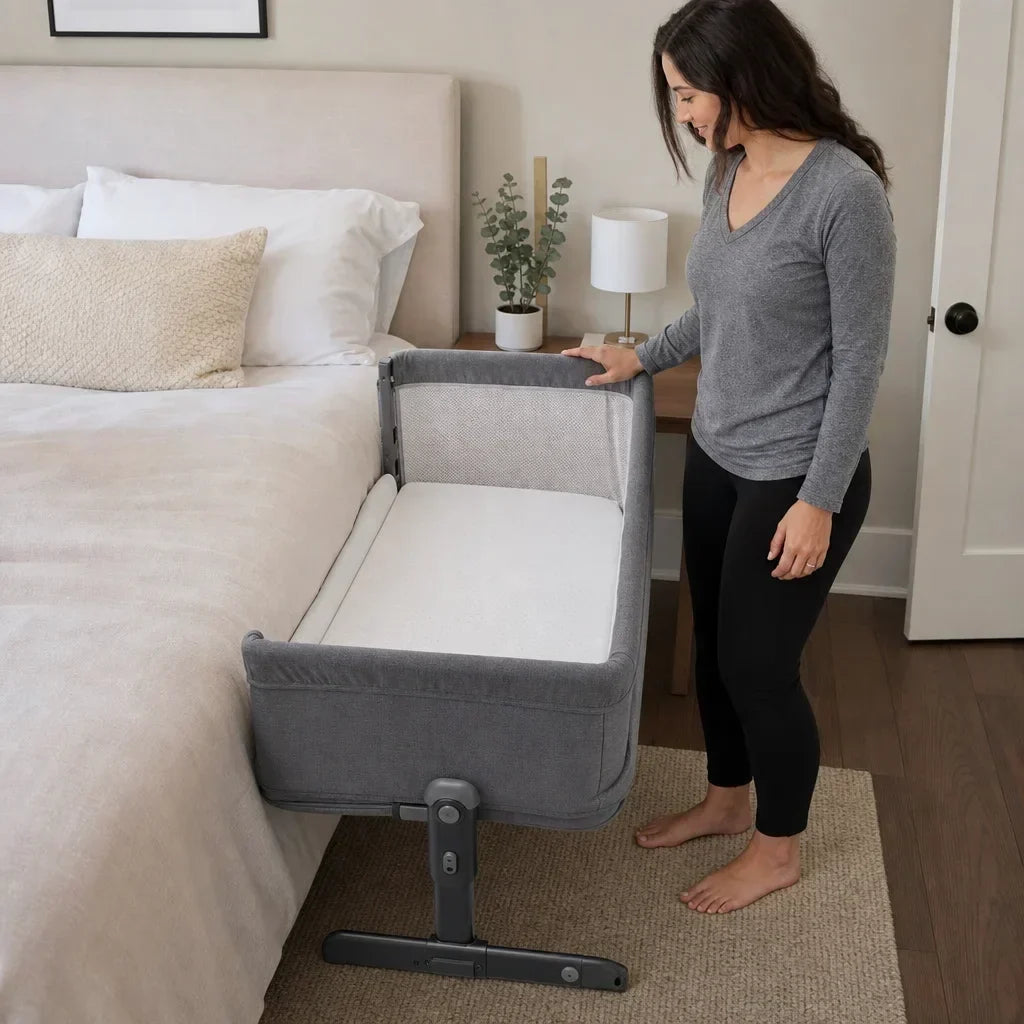
The short answer on bedside crib safety is yes, a bedside crib can be a safe sleep option when it gives your baby a separate flat sleep space, fits your bed properly, and is used exactly as the manufacturer instructs. It is not the same as bed-sharing, and a next to me crib safe setup depends on correct assembly, no gaps, and staying within the product's age, weight, and milestone limits.
Quick answer: are bedside cribs safe?
A bedside crib can be a safe choice for room-sharing when it is made for infant sleep, assembled correctly, and used with a firm, flat sleep surface and an empty sleep area. Health Canada advises that babies sleep on their back, on a separate sleep surface in the same room as their caregiver for the first 6 months.
A bedside sleeper safety setup is reasonable to consider if four things are true: your baby has a separate sleep space, the crib sits securely beside your bed, there are no dangerous gaps or loose bedding reaching into the baby area, and your baby is still within the product's limits. It stops being a safe option if the crib shifts, has been modified, does not match your bed, or your baby has outgrown it by weight or development.
Quick decision tree
Yes, consider it if the bedside crib is made for sleep use, fits your bed, locks or attaches as directed, and keeps baby on a flat separate mattress.
No, do not use it if you need to improvise straps, wedge blankets into gaps, leave the side down against the manual, or keep using it after your baby reaches a stop-use milestone.
What a bedside crib is and what it is not

A bedside crib, bedside sleeper, or next-to-me crib is a small baby sleep space designed to sit beside an adult bed, and some models can attach in a specific bedside mode. Bed-sharing means the baby sleeps on the adult mattress, which is a different setup with different risks.
A bassinet is also a small infant sleep space, but not every bassinet is meant to align to the bed. A mini crib is usually larger and stands on its own. A Moses basket is portable but not meant to attach to the adult bed. Those differences matter because the safe-use rules depend on the product category and the manufacturer's tested instructions.
| Sleep option | Where baby sleeps | Attaches to adult bed | Typical use window | Main safety checks |
|---|---|---|---|---|
| Bedside crib / bedside sleeper | Separate infant sleep surface beside your bed | Some models do | Short infant stage, often until early milestones | Stable fit, no gaps, correct bedside mode |
| Bassinet | Separate infant sleep surface near the bed | Usually no | Short infant stage | Flat mattress, proper stand, no extra padding |
| Mini crib | Separate infant sleep surface in room | No | Longer than most bassinets | Assembly, mattress fit, current standards |
| Adult bed | Same mattress as parent | Not applicable | Not recommended for routine infant sleep | Adult bedding, gaps, soft surface risks |
Safe sleep basics every bedside crib setup still needs

A bedside crib is only safe when the basic safe sleep rules are already in place. In Canada, the safest setup is a baby on their back, on a firm flat mattress, with a snug fitted sheet if the product allows one, and nothing else in the sleep space.
Loose blankets, pillows, crib bumpers, stuffed toys, sleep positioners, baby nests, and extra padding should stay out of the crib. Health Canada warns against soft items and products not intended for unsupervised infant sleep because they can increase the risk of suffocation or entrapment.
Adult bedding must not spill into the baby's space, even in a next to me crib safe sleeping setup. A bedside crib that sits flush to your bed can still become unsafe if a duvet, throw, or pillow crosses into the baby area.
Sleeping with a baby on a sofa or armchair is especially dangerous and should never be used as a substitute for a safe sleep crib. If you feed your baby at night and wake up with the baby in bed, move the baby back to their own sleep space as soon as you can do so safely.
How to set up a bedside crib safely: step-by-step checklist

Safe setup starts with using every part that came with the product and following the manual line by line. If any hardware, straps, clips, or mattress pieces are missing, stop and do not use it for sleep.
The frame should sit flat and stable on the floor, with wheel locks engaged if the model has wheels. If the crib rocks, slides, or lifts when you push it gently, the setup is not safe yet.
The mattress must be the exact one supplied with the crib, or a manufacturer-approved replacement if the brand allows one. A mattress that is thicker, softer, or leaves space at the sides can create a dangerous gap.
The bedside mode must match the manual exactly, including whether the side panel stays up or can be lowered only in a specific attached mode. I would not improvise here. If the instructions are unclear, treat that as a stop sign until you verify it with the manufacturer or retailer.
The sleep area should stay clear of cords, blinds, heaters, lamps, and wall hangings. Keeping the crib away from pull cords and heat sources is a standard nursery safety rule, not just a bedside crib rule.
Pre-sleep safety checklist
- Full assembly completed with original parts only - Locks engaged and frame stable - Mattress flat, firm, and correct for the model - No gap or shifting between bed and crib - Correct bedside mode used as instructed - No pillows, blankets, nests, or toys in the baby space - No cords, heaters, or curtain ties nearby
Common bedside crib safety mistakes and how to fix them
A gap between the crib and the adult mattress is one of the biggest problems because it creates an entrapment risk. If you can see space, feel movement, or need to stuff anything into the gap, stop using bedside mode and switch to standard standalone mode if the product allows it.
A duvet creeping into the baby area is unsafe because it turns a separate sleep space into a partly shared one. Pull adult bedding well back from the edge, dress for warmth instead of piling blankets, and keep pillows away from the bedside crib opening.
Using the wrong mattress costs safety fast because fit and firmness are part of how the product was tested. Never add a topper, pillow, folded blanket, or aftermarket insert to make the baby look more comfortable.
Leaving wheels unlocked or using the crib on an uneven floor makes the whole setup unstable. Lock the wheels every time and recheck them after cleaning, moving, or nighttime repositioning.
Inclining the sleep surface without medical direction is not a safe workaround for spit-up or congestion. A flat sleep surface is the standard recommendation for infant sleep, and convenience does not override that.
If your bed type makes a safe bedside setup impossible, a standard crib or bassinet beside your bed is usually the better choice. Close is good. Close with a separate safe surface is the goal.
Will a bedside crib fit your bed? Bed height and bed type guide

Bed compatibility matters because a bedside crib is only safe if it lines up with your bed the way the product was designed to. Before you buy, measure from the floor to the top of your mattress, note any frame overhang, and check how much floor space you have beside the bed.
Divan beds and simple platform beds can be easier matches because they often have cleaner edges, but the actual fit still depends on height range and strap routing for that model. Ottoman or storage beds can be harder because the base design may block legs or attachment points.
Beds with thick side rails, decorative frames, or under-bed drawers can interfere with the crib sitting flush. Adjustable beds add another issue because raising or lowering the adult bed can change alignment and create gaps.
A very low bed or very high bed is not automatically unsafe, but it does narrow your options because bedside crib height positions vary by model. Compare your bed measurements to the manufacturer's stated range before buying, not after opening the box.
| Bed type | What to check first | Common fit concern |
|---|---|---|
| Divan bed | Mattress height and side clearance | Strap path or edge alignment |
| Ottoman/storage bed | Under-bed space and opening base | Legs or straps may not sit properly |
| Framed bed with rails | Rail thickness and frame overhang | Crib may not sit flush |
| Platform bed | Overall height | Bed may be too low for some models |
| High mattress setup | Height range | Side may sit too low against bed |
| Adjustable bed | Movement of adult base | Alignment changes during use |
Measure-first checklist
- Floor to top-of-mattress height - Frame overhang or side rail depth - Under-bed clearance if legs must tuck in - Clear floor footprint beside the bed - Manufacturer bedside-mode compatibility notes
Can newborns sleep in a bedside crib?

Yes, many bedside cribs are designed for newborns from birth, but only if the specific model is approved for that stage and you follow its limits and instructions. A next to me crib safe for newborns setup still needs a flat, firm, separate sleep surface and proper assembly.
Newborn-safe does not mean every bedside crib is interchangeable. Some products are sold for overnight sleep, some are not, and some have stricter limits based on weight or early movement milestones.
Families doing frequent night feeds or recovering after birth often like the access a bedside crib gives them, especially after a C-section. That convenience can help, but I would never treat easier access as a reason to compromise on fit, attachments, or bedding safety.
If your baby was born early, has breathing concerns, or your healthcare provider has given special sleep instructions, use those medical directions first. This article is general information, not a sleep recommendation for your baby's specific health needs.
How long can a baby sleep in a bedside crib?

The right stop point is whichever comes first: the product's age limit, weight limit, or developmental milestone. For many bedside sleepers, the use window is about 4 to 6 months, but that is not universal and must be checked against the manual for your exact model.
A common upper weight limit on some models is around 9 kg, but again, parents should treat the manual as the final rule for that product. If the label says stop sooner, stop sooner.
Rolling, pushing up strongly, getting onto hands and knees, sitting, or pulling up are practical signs that the bedside crib stage may be ending even if the calendar says otherwise. Developmental milestones matter because babies outgrow these products by movement as much as by size.
The safest transition is usually to a full crib or another approved sleep space that still fits the baby's stage and your room layout. Planning that move early helps because it avoids the risky habit of using a small sleep space just a bit longer than you should.
Are bedside cribs safer than bed-sharing?

A properly used bedside crib is designed to reduce one major problem with bed-sharing by giving the baby a separate sleep surface right beside you. That is the key difference behind the phrase are co sleeper beds safe: a real bedside sleeper is not the same thing as placing a baby on the adult mattress.
Health guidance in Canada and internationally generally supports room-sharing with a separate baby sleep space, not routine bed-sharing for infant sleep. The safety benefit comes from proximity without sharing pillows, blankets, soft surfaces, or adult mattress gaps.
If you accidentally fall asleep during a feed, the safest next step is to move the baby back to their own crib, bassinet, or bedside sleeper as soon as you wake. That is a practical risk-reduction step, not a guarantee against harm.
What major health and safety bodies say about bedside sleepers
The most consistent advice from major health bodies is simple: keep your baby close, but on a separate sleep surface. Health Canada recommends room-sharing for the first 6 months and emphasizes a firm, flat, uncluttered sleep space.
The Canadian regulatory framework also matters because products sold for infant sleep must meet the applicable Cribs, Cradles and Bassinets Regulations when they fall within that category. Product safety is not just about design marketing. It is about compliance, instructions, and proper use.
Some international organizations discuss bedside sleepers carefully rather than enthusiastically endorsing every model by name. That cautious tone makes sense. A bedside sleeper can support safer room-sharing, but only when the product is suitable for overnight sleep and used exactly as directed.
Canadian crib safety standards and what labels to look for

For Canadian parents, the first filter is whether the product is sold for sleep use and gives clear manufacturer details, instructions, and limits. Look for the intended use, model number, age or weight guidance, and assembly information before you focus on style or extras.
The relevant Canadian rules are the Cribs, Cradles and Bassinets Regulations, made under the Canada Consumer Product Safety Act. Those rules cover safety requirements for products sold in Canada within those categories.
Older crib designs can raise concerns, especially if they are missing labels, hardware, or instructions. Drop-side crib designs have long been a major safety concern, and used products should be checked carefully against current Canadian safety expectations and recall information.
If you are shopping in person or online, transparency matters. A retailer should be able to tell you whether the item is approved for infant sleep, how the bedside mode works, and what limits apply. That matters as much as colour, fabric, or storage baskets.
Canadian standards callout
- Check that the product is sold for infant sleep use - Read the manual before first setup - Confirm age, weight, and milestone limits - Avoid products with missing labels or unclear origin - Check recall information before using any older or used model
Buying guide: what to look for in a safe bedside crib

The safest bedside crib is the one that fits your bed, holds your baby within its stated limits, and can be set up correctly every single night. Start with safety design: stable base, secure bedside mode, firm mattress, snug fit, and clear instructions.
Lockable wheels, secure height adjustment, and breathable side panels can be useful features, but convenience extras should stay secondary. Mesh sides may improve visibility, yet they do not replace the need for a flat mattress, empty sleep space, and a gap-free setup.
Room size and family routine should shape your shortlist. Small bedrooms may need a narrower footprint. Parents doing frequent feeds may prefer easy side access. Families planning travel should still confirm the product is approved for sleep and safe to reassemble properly each time.
If you are comparing a bedside crib with baby cribs, mini cribs, or bassinets, compare the safety basics first and the convenience features second. That order saves parents from buying for looks and fixing problems later.
Buying criteria list
- Approved for infant sleep use - Bedside mode clearly explained in the manual - Stable base and secure locking points - Mattress included and fitted correctly - Bed height compatibility you can verify - Clear stop-use limits for weight and milestones - No need for add-ons, wedges, or homemade fixes
Is a second-hand next to me crib safe?

A used bedside crib can be risky if you cannot verify the exact model, original parts, mattress, and manual. When parents ask me is a second hand next to me crib safe, my answer is only if you can confirm all of that and the product has not been recalled.
Missing screws, stretched straps, cracked plastic, bent frames, warped bases, and unapproved replacement mattresses are all reasons to walk away. A sleep product with even one improvised part is not a bargain anymore.
In Canada, parents can check recall notices through Health Canada's consumer product recall system. That step matters because a product can look clean and still have a known safety issue.
Only replace the mattress if the manufacturer allows it and the replacement is made for that exact model. Never cut foam, add padding, or use a mattress that seems close enough.
Used bedside crib checklist
- Model label present and readable - Manual available or downloadable from manufacturer - All original hardware included - Straps, clips, and locks intact - No cracks, warping, rust, or bent frame parts - Mattress is original or manufacturer-approved - No modifications or aftermarket add-ons - Recall check completed
Never DIY: are sidecar crib hacks safe?
DIY sidecar cribs, modified cots, and homemade tie-down systems are not safe recommendations for infant sleep. Once you alter the structure or use it outside the tested instructions, you no longer know how it will behave under real use.
The main risks are entrapment gaps, weak attachment points, mattress mismatch, and frame instability. That is why a homemade setup can look sturdy in daylight and still fail the moment a parent leans on the bed or the baby shifts position.
If your bed does not work with a bedside crib, the safer fallback is a compliant crib or bassinet placed beside the bed. Separate sleep space beside you beats an improvised sidecar every time.
Cleaning, maintenance, and re-checking safety over time
A bedside crib stays safe only if you keep checking it after setup day. Tighten hardware, inspect straps, test locks, and look for mattress movement or frame wobble on a regular basis.
Follow the manufacturer's cleaning instructions for mesh, fabric covers, and mattress surfaces. Harsh cleaning methods can damage fabric tension, fasteners, or protective finishes, which then affects safe use.
Every fold, move, or reassembly should be treated like a fresh setup. Travel-friendly does not mean mistake-proof, and guest-room use still needs the same full safety check as home use.
If the product starts to lean, squeak, slide, or loosen during normal use, stop and inspect it before the next sleep. Small changes in stability are worth taking seriously with any infant sleep product.
Bedside crib vs bassinet vs crib: which is right for your family?
A bedside crib is best for parents who want close nighttime access while keeping a separate sleep surface beside the bed. A bassinet can work similarly for early room-sharing, while a full crib usually gives the longest use period and the fewest bed-fit questions.
The trade-off is usually convenience versus flexibility over time. A bedside crib may feel easiest in the newborn stage, but a standard crib often lasts much longer and avoids compatibility issues with tall frames, ottoman beds, or unusual layouts.
The right choice is the safest option you can set up correctly in your actual room, with your actual bed, and within your budget. That is more useful than chasing one format because it is trendy or heavily advertised.
FAQ
Are bedside cribs safe for newborns?
Yes, many are designed from birth, but only if the exact model is approved for newborn sleep and you follow its setup and stop-use limits.
Is a next to me crib safe for overnight sleep?
It can be, if it is sold for overnight infant sleep, assembled correctly, and used as a separate flat sleep space with no soft bedding or gaps.
How long can a baby sleep in a bedside crib?
Many models are used for about 4 to 6 months, or up to an upper weight around 9 kg, but your model's manual is the rule that counts.
When should I stop using a bedside crib?
Stop at the earliest of the product's age limit, weight limit, or milestone limit, such as rolling, pushing up, sitting, or pulling up.
Is a second-hand next to me crib safe?
Only if you can verify the model, parts, mattress, manual, and recall status, with no damage or modifications.
Can my baby sleep next to me in bed instead?
Routine infant sleep in an adult bed is not the same as room-sharing with a separate crib, bassinet, or bedside sleeper, and it carries different risks from soft bedding, adult mattresses, and gaps.
Do I need a bedside crib if I already have a crib in my room?
No. You do not need one if your current crib or bassinet already gives your baby a safe separate sleep space in your room.
What bedding is safe in a bedside crib?
Use only the fitted sheet and mattress approved for that product, with no pillows, loose blankets, bumpers, toys, nests, or positioners.
Can I use a bedside crib for naps and travel?
Yes, if the manufacturer approves it for sleep in those situations and you do a full safe setup every time.
Are DIY sidecar cribs safe?
No. Modified sleep products and homemade attachment systems should not be used for infant sleep.
Will a bedside crib fit a high bed or ottoman bed?
Maybe, but only if the height range, leg clearance, and attachment method match your bed. Measure before you buy.
What crib safety standards should Canadian parents look for?
Look for products sold for infant sleep use in Canada, with clear instructions and compliance with the applicable Cribs, Cradles and Bassinets Regulations.
When to ask for help
If you are unsure about bed height, frame shape, bedside mode, or whether a product is right for overnight sleep, get help before first use. Bringing your bed measurements and room dimensions into a showroom or virtual consultation can save you from buying the wrong format.
If you want to compare bedside cribs, full cribs, and other nursery sleep options side by side, Baby Warehouse can help in store or by virtual consultation, with Canada-wide delivery available. Ask practical questions first: will it fit, will it stay stable, and will it still work once your baby starts to move more?


