

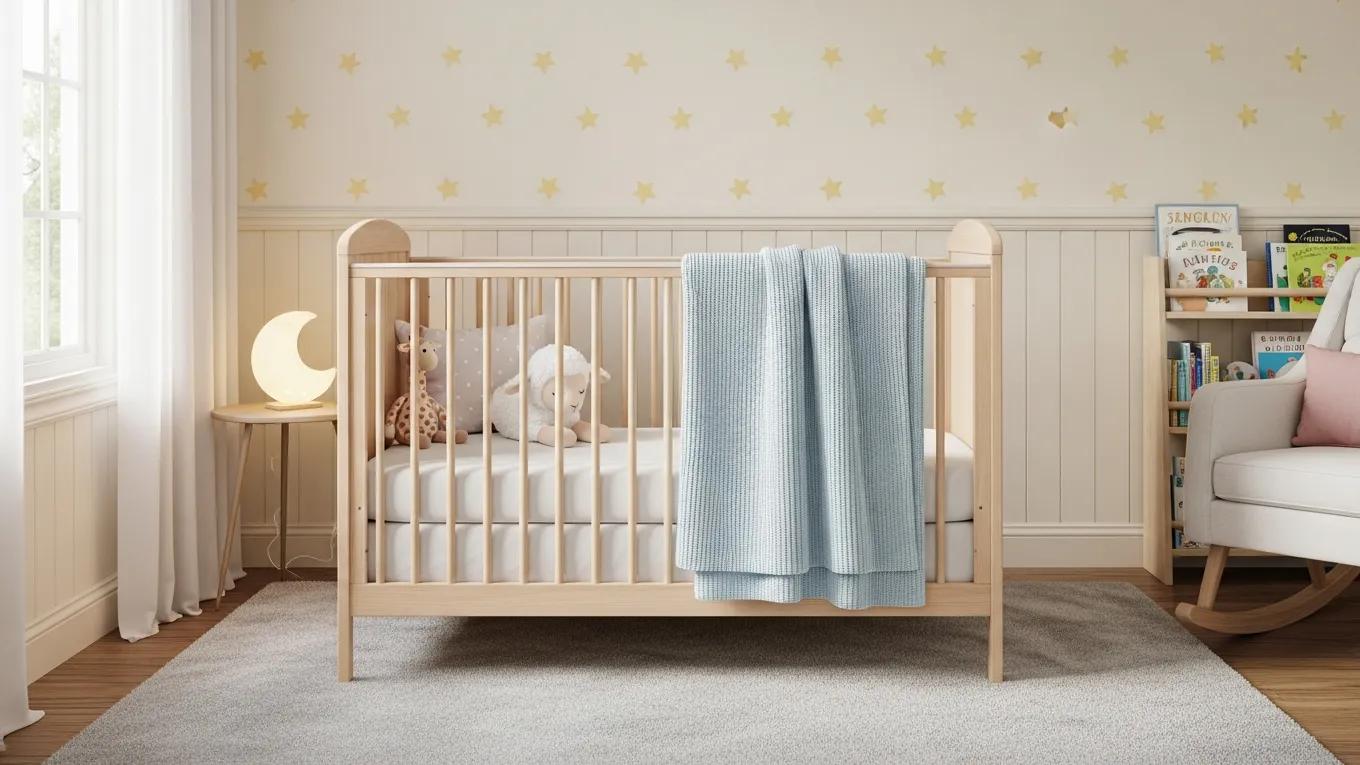
Choosing the correct crib mattress size is essential for infant safety and comfort. This guide covers standard dimensions, measuring your crib, key safety certifications, and where Canadian parents can find quality mattresses to ensure a snug, hazard-free sleep surface.
What Are the Standard Crib Mattress Sizes Available in Canada?

The most common standard crib mattress measures about 28 inches by 52 inches (71 cm by 132 cm), designed to fit standard cribs tightly. Options include innerspring, foam, organic, and dual-sided mattresses; choose the type that meets safety and comfort needs while fitting your crib snugly.
Which Dimensions Define a Standard Crib Mattress?
Standard dimensions (roughly 28" × 52") aim to minimize gaps between mattress and crib rails. Because crib interiors can vary slightly, pick a mattress that reduces side gaps to lower the risk of entrapment or suffocation.
How Do Mini and Portable Crib Mattress Sizes Compare?
Mini and portable mattresses are smaller—typically around 24" × 38" (61 cm × 96.5 cm)—and suit travel cribs or compact spaces. Only use these in compatible cribs; using the wrong size can create dangerous gaps around the mattress edges.
How to Measure Your Crib Correctly for an Accurate Mattress Fit?
Measure the crib interior—length and width—from inside rail to inside rail at the widest points to confirm the correct mattress size. Accurate measuring prevents buying an ill-fitting mattress.
What Steps Ensure Precise Length and Width Measurement?
Use a measuring tape and measure inside edge to inside edge for both width and length. Record the dimensions and have someone double-check to avoid errors before ordering a mattress.
Why Is Mattress Thickness Important for Safety and Comfort?
Thickness affects support and safety: too-thin mattresses can sag and create gaps, while overly thick mattresses may let an older infant reach or climb. A typical infant mattress thickness is 4–6 inches; firmness and composition also influence safety and comfort.
AAP & CPSC Guidelines for Firm, Flat Crib Mattresses
Soft sleep surfaces are risk factors for sleep-related infant death. Soft surfaces can conform around an infant’s head leading to rebreathing and suffocation, especially if the infant is placed in, or rolls to, prone position. To reduce these risks, the American Academy of Pediatrics (AAP) recommends infants be placed on a firm surface for every sleep. The AAP also recommends the sleep surface be flat, with no more than a 10° incline. Inclined surfaces may cause the infant to slide down and end up in a position that may compromise their airway or increase rebreathing. A crib, bassinet, portable crib or play yard that meets the US Consumer Product Safety Commission (CPSC) safety standards is recommended. If a mattress is needed for the sleep surface, the CPSC also provides standards for infant mattresses. Infant caregivers should be advised about safe sleep recommendations during pregnancy and the first year of life. Clinicians are encouraged to describe a safe sleep surface as “hard,” as some caregivers misunderstand the term “firm.” The sleep surface should not indent when pressure is applied.Firm and Flat Sleep Surfaces, CR Ahlers-Schmidt, 2025
For enhanced safety, prioritize mattress firmness—soft surfaces increase sleep-related risk.
Crib Mattress Firmness & Fitted Sheet Safety
The crib mattress should be firm and not indent when the infant is sleeping on it. The only other item in the sleep environment should be a fitted sheet, which should fit snugly on the mattress and wrap around to the bottom of the mattress on all four sides. All other objects, including pillows, stuffed toys, quilts, comforters, and mattress toppers, should be removed.Baby products: how to evaluate them for potential safety, 2020
What Safety Standards and Certifications Should You Look for in a Crib Mattress?

Look for mattresses with recognized certifications and safety testing to ensure materials meet emissions and chemical limits. Certified products reduce the chance of exposure to harmful substances.
GREENGUARD and JPMA (Baby Safety Alliance) are common certifications indicating testing for emissions and safety; check labels when shopping.
Which Certifications Guarantee Mattress Safety and Non-Toxic Materials?
GREENGUARD and JPMA (Baby Safety Alliance) suggest a mattress passed emissions and safety tests and help confirm materials are non-toxic. Always verify certification claims on product labels.
How Does Proper Mattress Fit Prevent Safety Hazards Like Suffocation?
A snug mattress fit prevents gaps where an infant could become entrapped. Guidelines advise no more than two fingers (or about 3 cm) between mattress and crib edge to limit side gaps and suffocation risk.
Crib Mattress Size for Suffocation Prevention
Ensure the mattress is the correct size and fits snugly, with no more than a 3 cm gap on any side.Preventing choking and suffocation in children, 2012
Where Can Canadian Parents Find Quality Crib Mattresses and Delivery Options?
Canadian parents can buy crib mattresses from national and local retailers; shopping locally lets you inspect products and support community businesses while ensuring compliance with regional safety standards.
Both online and in-store options are available; compare certifications, firmness, and fit before buying.
What Are the Advantages of Buying from Baby and Kids Furniture Warehouse?
Retailers like Baby and Kids Furniture Warehouse focus on baby-safe furniture and mattresses, offering product knowledge and a selection that emphasizes certified, durable options.
They offer online and in-store purchases plus services such as Canada-wide delivery for convenience.
How Does Canada-Wide Delivery Work for Crib Mattresses?
Retailers offering Canada-wide delivery ship mattresses directly to your home with standard safety packaging. Delivery times vary by location and stock; expect typical lead times around one to two weeks depending on logistics.


